
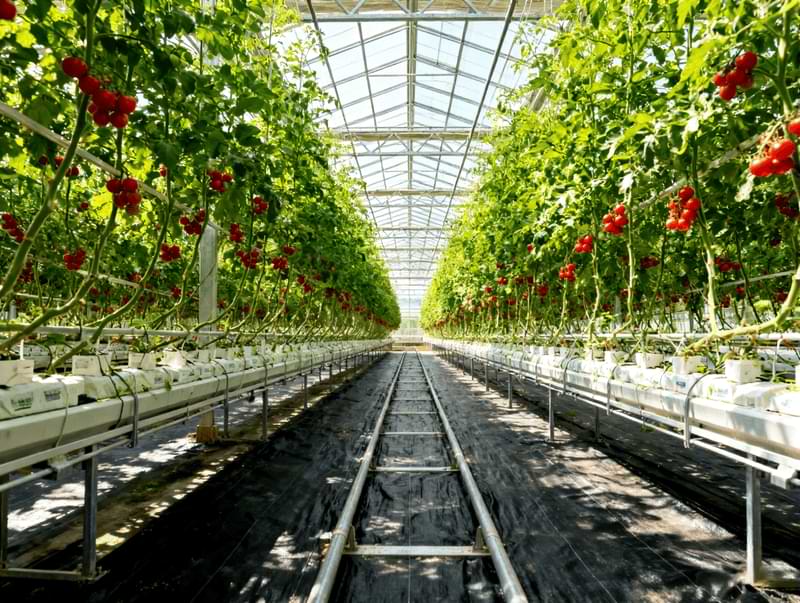
Investing in a commercial greenhouse is a major capital decision. It's not just buying a building; it's investing in a high-performance "crop factory" capable of precision environmental control and high-yield, year-round production.
Getting it right means a high-ROI asset; getting it wrong means years of high costs and low yields.
However, faced with a dizzying array of structures (Venlo vs. Gothic), covering materials (Glass vs. PC), and automated systems, many first-time investors or even experienced growers feel overwhelmed. The market is full of technical jargon, and it's difficult to know which features are "must-haves" and which are "nice-to-haves."
This "101 Guide" is designed to be your comprehensive resource. We will systematically walk you through everything from structural selection to long-term cost factors, helping you clarify your options and avoid expensive mistakes.
This guide is written specifically for agricultural investors, commercial growers, farm managers, and project teams seeking high-efficiency, profitable agricultural solutions.
Structures: The primary commercial greenhouse structures and their best-use cases in specific climates.
Coverings: The detailed pros and cons of Glass, Polycarbonate, and PE Film, going beyond price to light transmission and lifespan.
Costs: The core factors that drive both your initial project budget (CapEx) and your long-term operational costs (OpEx).
Systems: The essential systems (heating, cooling, irrigation) you must consider to make your greenhouse functional and profitable.
Step 1: Choose Your Structure
The "skeleton" of your greenhouse—its structure—is the most permanent decision you'll make.
It dictates its fundamental strength, its ability to withstand local weather (wind, snow, and hail), its internal air volume (which affects climate stability), and the types of covering materials and automated systems it can support.
Common Commercial Greenhouse Structures
Each structure is engineered to solve specific climate challenges and crop requirements.
Venlo Structure

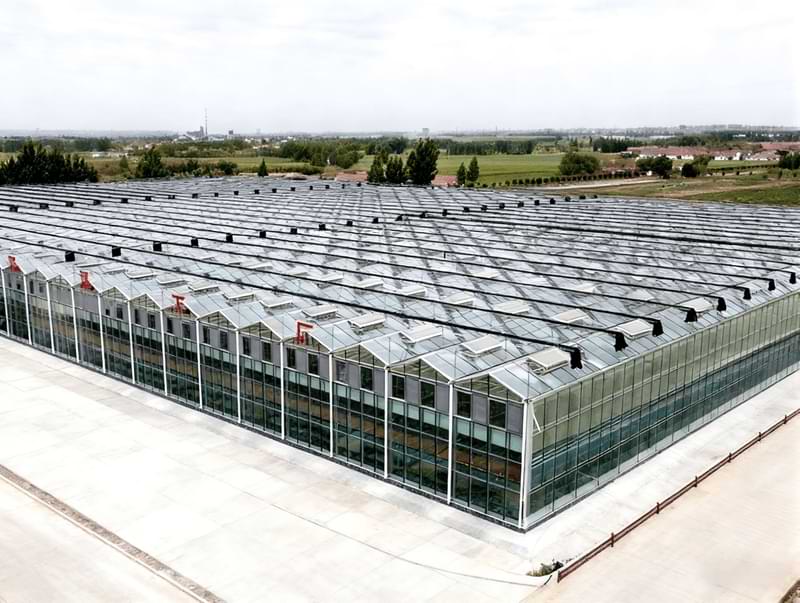
The Venlo is the gold standard for high-end glass greenhouses, a design perfected in the Netherlands. Its key feature is a roof composed of smaller glass panes and supported by a robust truss system.
This design is exceptionally strong, allowing it to support the immense weight of glass and heavy snow loads. The integrated gutter system also acts as a part of the load-bearing structure.
Its modularity and high spatial efficiency (easily achieving tall gutter heights of 6-8 meters) make it the top choice for high-investment, high-yield projects involving crops like tomatoes, cucumbers, and peppers, where tall-growing plants and automation are standard.
Gothic Arch
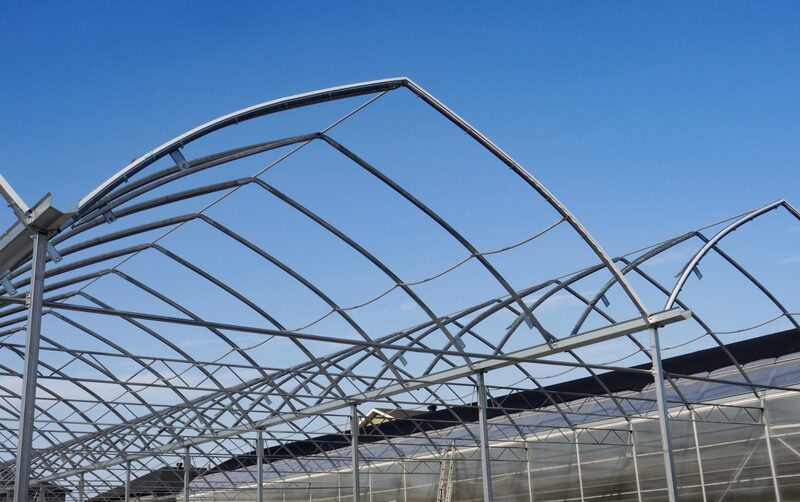
Named for its pointed "gothic" design, the arch's primary advantage is its ability to shed snow and water effortlessly, preventing build-up that can collapse a Quonset-style structure.
This makes it ideal for regions with heavy snowfall. Unlike a curved hut, the high, pointed peak provides ample interior space and a large air buffer. This high air volume is crucial as it helps stabilize temperature swings and humidity, creating a more consistent growing environment.
Its adaptable frame is strong and can be covered with either double-layer poly film or rigid polycarbonate panels, making it a versatile mid-range option.
Quonset / Tunnel Structure
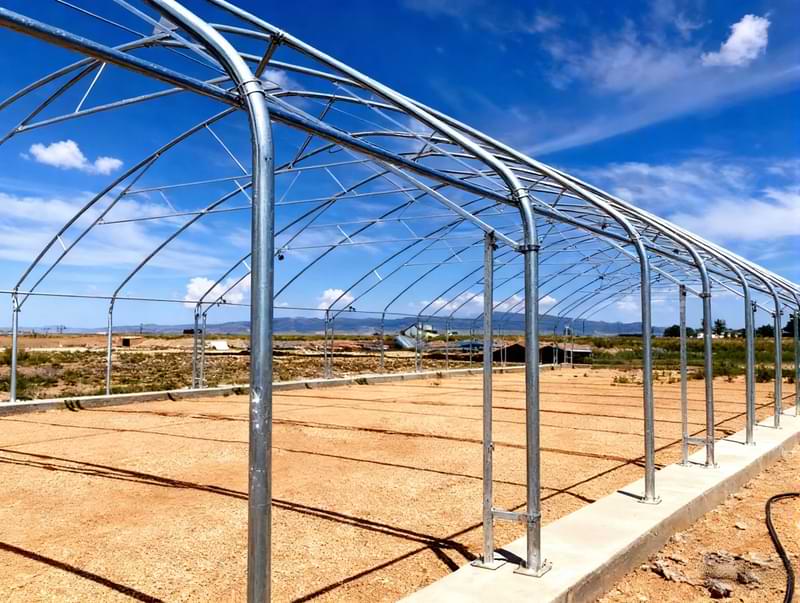
This is the most cost-effective structure, recognized by its simple, semi-circular arch, usually built with a galvanized steel frame and a single or double layer of PE film.
While its rapid construction and exceptionally low initial investment make it a dominant choice for large-scale seasonal production (like berries) or basic nursery houses, it has limitations.
Its curved sidewalls and typically lower gutter height reduce usable space near the edges and can make mechanization (like using tractors) difficult.
Each structure has unique wind and snow load ratings, optimal spans, and gutter heights. For a technical comparison with detailed diagrams to help you visualize the differences, read our full guide: The Main Types of Commercial Greenhouses
Special Climate Design: The Sawtooth
Beyond these common types, specialized designs exist for specific climates, and the Sawtooth is a prime example.
The Sawtooth Structure is engineered specifically for hot, tropical, and subtropical climates where removing heat is the #1 challenge. Its roof features a series of repeating "sawtooth" patterns, with a vertical or slanted vent at the peak of each "tooth."
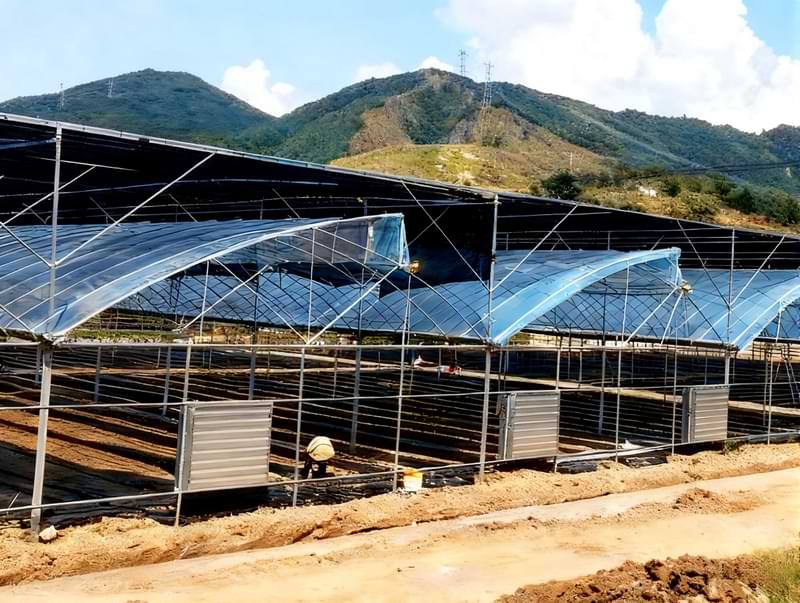
This design brilliantly uses two physical principles:
Thermal Buoyancy: Hot air inside the greenhouse naturally rises.
Venturi Effect: Wind blowing over the roof creates negative pressure, pulling the hot air out of the vents.
This combination achieves maximum natural ventilation. As hot air escapes through the roof vents, cooler air is drawn in from the sides (often through insect-netted walls).
This can significantly reduce or even eliminate the need for costly fan-and-pad cooling systems, slashing operational costs. It's a very popular design for tropical vegetable, flower, and aquaculture projects.
If your project is in a hot climate, running fans 24/7 can kill your profitability. Natural ventilation is key. Learn exactly how the Sawtooth Greenhouse Design Maximizes Airflow.
Step 2: Choose the Right "Skin" (Greenhouse Covering)
Once you've chosen the skeleton, it's time to choose the "skin." The covering (or glazing material) is one of the most critical factors influencing your greenhouse's performance and profitability.
It directly determines:
Light Transmission: The quantity and quality of light reaching your plants (essential for photosynthesis).
Thermal Insulation: The R-value, or how well the material stops heat from escaping (a huge factor in winter heating costs).
Lifespan and Maintenance: How often you'll need to repair or replace it.
The Three Main Material Options
Glass:
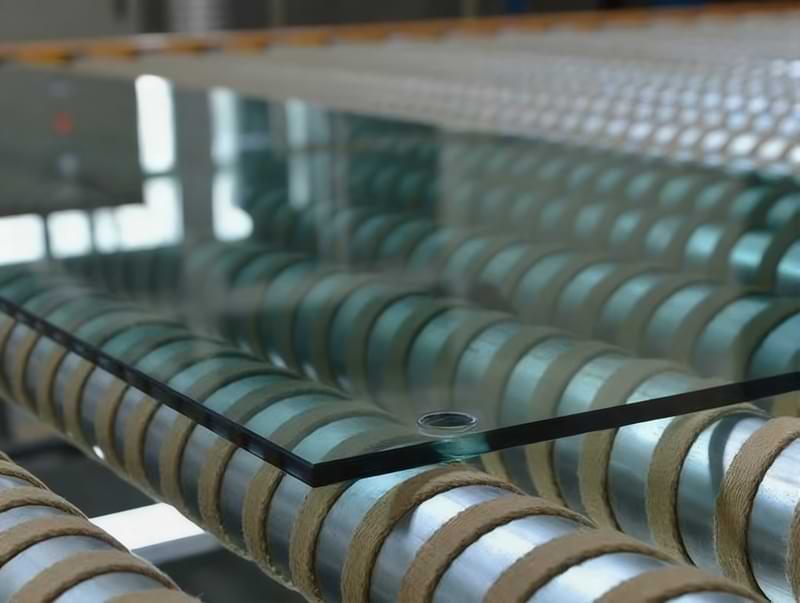
Pros: Highest light transmission (90%+), which does not degrade over time. Modern diffused glass (often etched or with an AR coating) is a game-changer: it scatters light, preventing harsh shadows, eliminating "hot spots," and allowing light to penetrate deeper into the plant canopy, reaching lower leaves. It has the longest lifespan (30+ years) and is non-flammable.
Cons: Highest initial cost. It is heavy, requiring a stronger (and more expensive) Venlo-style structure. It is a poor insulator on its own (low R-value) compared to twin-wall PC. It can also be shattered by severe hail (if not tempered).
Polycarbonate (PC):
Pros: Excellent insulation. Twin-wall or multi-wall options trap air between layers, creating a high R-value that can cut heating costs by 30-40% compared to single-layer glass. It has extremely high impact resistance (virtually unbreakable, great for hail-prone areas) and is lightweight.
Cons: Light transmission is lower than glass and will degrade over time (8-15 year lifespan) as the plastic is exposed to UV, leading to yellowing and hazing. The internal channels can also accumulate algae or condensation if not properly sealed, further reducing light.
Polyethylene (PE) Film:
Pros: Lowest initial cost by a large margin. Modern co-extruded (3 or 5-layer) films are highly advanced: one layer might block UV, another might be an IR (Infrared) reflector to trap heat at night, and an inner layer can have anti-drip properties. Using two layers inflated with air creates a "double-glazing" effect, dramatically improving insulation.
Cons: Shortest lifespan. It must be replaced every 3-5 years, creating ongoing labor costs and plastic waste. It's the most vulnerable to physical damage (tears from wind or animals).
PAR light, R-value, haze percentage, warranty... the technical specs can be confusing. For a detailed data-driven comparison, read: A Guide to Greenhouse Covering Options
The Big Debate: Glass vs. Polycarbonate
This is a critical decision growers face, and the answer is a long-term economic calculation, not just a preference.
| Feature | Glass (Tempered / Diffused) | Polycarbonate (Twin-Wall) |
|---|---|---|
| Lifespan | 30+ years | 10-15 years |
| Light | Excellent (90%+), Does not degrade. | Good (80-85%), Degrades over time. |
| Insulation | Poor (Low R-value) | Excellent (High R-value) |
| Initial Cost | Highest | High |
| Maintenance | Low (occasional washing) | Low (must be replaced 1-2 times) |
| Impact Res. | Good (if tempered) | Excellent (Unbreakable) |
Choose Glass if... Your primary goal is maximizing light for high-value crops (like tomatoes, peppers, or cannabis) and you plan to operate for 20+ years. The non-degrading light transmission means your yields in year 15 will be as high as in year 1. The high initial cost is amortized over a very long lifespan.
Choose Polycarbonate if... Your primary concern is insulation. If you are in an extremely cold climate (e.g., Canada, Scandinavia), the energy savings from a twin-wall PC's high R-value can be the deciding factor. It's a balance: you trade some light transmission for significant operational savings on heating.
Which one really has a higher long-term Return on Investment (ROI)? We built a full cost-benefit analysis model here: Polycarbonate vs. Glass Greenhouse: A Complete Comparison
Step 3: Understand the Costs
"How much does a commercial greenhouse cost?" This is a question with no simple answer. A commercial greenhouse is a highly customized project, and its price is determined by several complex factors. Anyone who gives you a "price per square meter" without a detailed consultation is guessing.
What Drives the Price?
Before you request a quote, be clear on these factors that make up your budget:
Initial Cost (CapEx - Capital Expenditure):
Structure & Covering: As discussed, this is the first major variable.
Foundation: A glass greenhouse requires a robust concrete pier and perimeter foundation. A film tunnel may only need ground anchors.
Internal Systems: This is a huge cost center. It's not one item, but many:
Automated Benches (e.g., Ebb & Flow, Rolling Benches)
Irrigation & Fertigation computers
Supplemental Lighting (LEDs are more expensive upfront)
Climate Control (Boilers, Fans, Vents, Fogging systems)
Energy/Shade Screens (and their motors)
Site Prep & Labor: Do not underestimate this! The cost of excavation, leveling the site, bringing in utilities (water, 3-phase power, gas), and the cost of local, skilled labor and permits can be 20-30% of the total project budget.
Operational Cost (OpEx - Operational Expenditure):
Energy (The #1 OpEx): This is almost always the largest operational expense. Heating in winter and (to a lesser extent) fan cooling in summer. This is why your covering's insulation (R-value) and energy screens are so critical.
Maintenance: PE film must be replaced every 3-5 years. This is a recurring CapEx that must be budgeted for.
Labor: Less automated greenhouses require more people to water, ventilate, and manage crops. Investing in automation (CapEx) directly reduces your long-term labor cost (OpEx).
Consumables: Water, fertilizer, growing media, C02, etc.
Focus on ROI, Not Just Price
Remember, a greenhouse is a tool for production. The cheapest greenhouse is often the most expensive to run.
For example, a cheap film tunnel with poor insulation can double heating bills, while a high-transmission glasshouse might pay for its premium cost in 3-5 years through higher yields. Always calculate the long-term ROI based on your specific crop, market, and climate, not just the initial price tag.
Step 4: The Buying Guide: Essential Systems
A greenhouse without systems is just an empty, passive shed. A modern commercial greenhouse is an active, precision-controlled machine. These are the systems you must consider to make it functional.
Climate Control is Non-Negotiable
This is the core value of a greenhouse—creating a perfect climate year-round.
Heating System:
In cold regions, this is the key to winter production.
Boiler & Pipe: Hot-water boilers (gas, propane, biomass) circulating water through a network of perimeter and under-bench pipes. This provides a very stable, gentle radiant heat.
Forced-Air: Unit heaters that blow hot air. Cheaper to install, but can create hot/cold spots and dry out the air.
Thermal Screens (Energy Curtains): An essential companion to any heating system. This is a retractable fabric "blanket" pulled over the crops at night, trapping heat (like a blanket on a bed) and cutting energy use by 30-50%.
Choosing the right thermal screen and heating strategy is crucial for your bottom line. Read our energy-saving tips: How to Keep a Greenhouse Warm in Winter
Cooling & Ventilation:
Natural Ventilation: Relies on roof and side vents (as in a Sawtooth or Venlo structure). Cheapest to operate as it uses no electricity.
Forced Ventilation (Fan & Pad): Also called an Evaporative Cooling system. One wall has a wet pad, and the opposite wall has exhaust fans. The fans pull air through the wet pad, evaporating water and dropping the air temperature by 10-20°F (5-11°C). This is a lifesaver in hot, dry climates, but is not effective in high-humidity areas (like a tropical coast).
Fogging Systems: High-pressure fog can flash-evaporate and cool the air without wetting the plants, an alternative for humid climates.
Other Key Systems
Irrigation & Fertigation: The heart of modern agriculture. "Fertigation" (Fertilizer + Irrigation) is the process of using an injection system to mix precise nutrient recipes into your irrigation water.
Drip Irrigation: Delivers this nutrient solution directly to the root zone of each plant via a small emitter. Highly efficient, saves water.
Ebb-and-Flow: Benches are flooded with the nutrient solution for a short period, and then the water drains away to be recycled. Used for potted plants.
Shading Systems: In regions with intense summer sun (e.g., Texas, Middle East), even high-light crops can be burned. Retractable shade curtains (either internal or external) are essential to reduce light intensity and temperature.
Grow Lights (Supplemental Lighting): In high-latitude regions (e.g., UK, Canada) or during cloudy winters, there simply isn't enough natural light to grow. Supplemental lighting (either High-Pressure Sodium - HPS, or LED) is required to extend the "day" and maintain production.
Conclusion: Your Next Steps
You've completed the 101 course!
We've learned that building a successful commercial greenhouse is a complex systems-engineering task. It requires a careful balance of crop needs (high-light vs. low-light), local climate (hot vs. cold, dry vs. humid), and your long-term budget (CapEx vs. OpEx).
There is no single "best" greenhouse—only the one that is "best-fit" for your specific project.
Your next step is the 201 analysis. We recommend you stop blindly comparing generic prices online and start a professional consultation. A 30-minute call with an engineer who understands all these systems will save you 30 hours of confused research.
Ready to Build Your Crop Factory?
Contact our greenhouse engineers today for a free, no-obligation proposal. We'll analyze your crop, climate, and goals to help you build the right "crop factory" from day one.
Contact Us Now English
 Malaysia
 Indonesia