
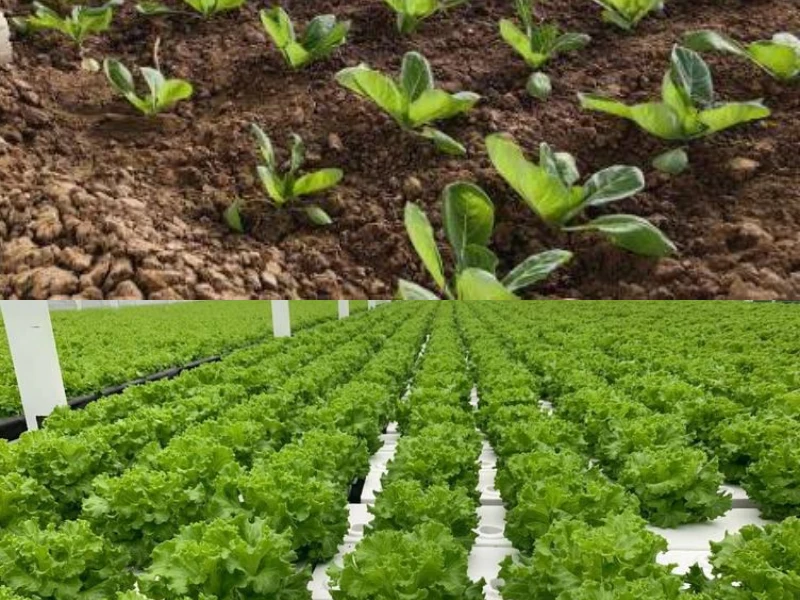
Hydroponic lettuce can yield over 10× more per square meter than soil-grown lettuce. But a hydroponic greenhouse can also cost 21× more to set up than its soil-based equivalent.
So which system actually makes more money?
The honest answer: it depends on what you're growing. Most articles skip this and just tell you hydroponics is better. This guide breaks down the real numbers — construction costs, yield data, operating costs, and ROI scenarios — and tells you exactly which system wins for each major crop type.
| Crop | Recommendation | Key Reason |
|---|---|---|
| Lettuce / Leafy Greens | Hydroponic | 10× yield, up to 40% profit margins |
| Tomatoes | Hydroponic (medium–large scale) | 16× yield advantage, but high energy cost |
| Herbs (Basil, Mint) | Hydroponic | Fast cycles, high value per sq ft |
| Roses / Cut Flowers | Depends on market | Organic soil commands a price premium |
| Peppers / Cucumbers | Location-dependent | Soil competitive in low-energy-cost regions |
| Root Vegetables | Soil | Not suited for most hydroponic systems |
How the Two Systems Work
The fundamental difference between hydroponic and soil greenhouses is not the structure — it’s what happens at the root zone.
In a soil greenhouse, plants draw nutrients from organic matter broken down by microorganisms in the growing medium. This process is natural but inherently inefficient: you cannot know precisely how much of any nutrient the plant absorbs at any moment, and a significant portion of fertilizer is lost to leaching or microbial activity. Soil also accumulates salts over time, requiring periodic replacement or sterilization.
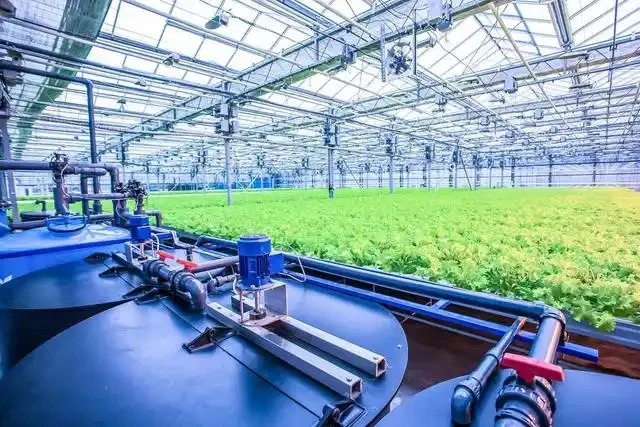
In a hydroponic greenhouse, soil is removed entirely. Plants grow in neutral substrates — rockwool, coco coir, perlite — or with roots suspended directly in a nutrient solution. Every input, from pH to electrical conductivity (EC), is precisely monitored and adjusted in real time. In closed-loop systems, water and nutrients are recirculated rather than drained away.
These differences create very different cost structures — which is where the profitability analysis begins.
Hydroponic vs. Soil Greenhouse: Setup Costs
This is the first major hurdle for hydroponic greenhouse investment. The systems require specialized infrastructure that simply doesn’t exist in a basic soil greenhouse.
| Cost Component | Soil Greenhouse | Hydroponic Greenhouse |
|---|---|---|
| Structure | $15–$25/sq ft | $15–$25/sq ft (same) |
| Growing system / substrate | Low — soil prep only | High — channels, trays, rockwool, pumps |
| Irrigation & nutrient delivery | Basic drip or manual | Closed-loop system, dosing units, sensors |
| Automation & climate control | Optional | Often essential (pH/EC monitoring) |
| Total: small scale (<500 m²) | ~$50,000–$80,000 | ~$100,000–$200,000 |
| Total: medium scale (1,000 m²) | ~$150,000–$250,000 | ~$300,000–$500,000 |
Industry benchmarks consistently show that a hydroponic greenhouse costs 30–70% more to build than a comparable soil greenhouse. For fully automated commercial systems, the gap can be wider — one peer-reviewed study found the hydroponic initial investment was 21.76 times higher in a controlled environment comparison.
Hydroponic vs. Soil Greenhouse Yield
Yield data is where hydroponic greenhouses make their strongest case — but the numbers need context.
| Crop | Hydroponic Yield | Soil Greenhouse Yield | Advantage |
|---|---|---|---|
| Lettuce | ~41 kg/m²/year | ~3.9 kg/m²/year | ~10× |
| Tomatoes | 65–308 tons/acre/year | ~4 tons/acre/year | Up to 75× |
| Herbs | Multiple cycles/year | 2–3 cycles/year | 2–4× more cycles |
| Cucumbers | High, year-round | Seasonal limitations | Moderate |
The lettuce figures come from a 2023 peer-reviewed study in Frontiers in Plant Science comparing identical greenhouse environments — the hydroponic system delivered 134% higher yield and over 50% higher water productivity. The tomato numbers reflect commercial grower data from the US and Pakistan.
Operating Costs
Higher yields don’t automatically mean higher profit. Hydroponic systems introduce operational costs that soil greenhouses largely avoid.
Energy
The biggest variable. Hydroponic greenhouses — especially those with supplemental lighting — consume substantially more electricity. Small indoor vertical farms average $3.45/sq ft annually on energy alone, representing 12% of total operating expenses. For larger operations, that climbs to $8.02/sq ft. In high-electricity-cost regions, this can erode the yield advantage significantly.
Water
This is where hydroponics wins decisively. Closed-loop systems reduce water consumption by up to 90% compared to soil-based growing. Greenhouse tomato production requires around 15 liters of water per kilogram of produce, versus 60 liters per kilogram in conventional drip-irrigated farming. In water-scarce regions, this is often the deciding factor.
Labor & Technical Expertise
Hydroponic systems require more skilled labor. Managing nutrient solutions, maintaining pH and EC levels, and troubleshooting failures demands ongoing expertise. Well-automated systems can eventually reduce labor requirements, particularly for weeding, soil preparation, and pest management.
Pest & Disease Management
Soil-borne pathogens — fusarium, pythium, nematodes — are eliminated in hydroponic systems, reducing pesticide costs and crop losses. However, if a nutrient solution becomes contaminated, it can spread rapidly through the entire closed-loop system. Biosecurity protocols matter more in hydroponics, not less.
Which Crops Are Most Profitable in a Hydroponic Greenhouse?
This is the section most articles skip. Lumping all crops into a single comparison misses the point entirely — the answer genuinely varies by what you’re growing.
Fast growth cycles (30–45 days), minimal nutrient complexity, and a 10× yield advantage make this the strongest hydroponic case. Profit margins can reach 40%, with revenue potential around $14–21/sq ft annually. NFT and DWC systems are ideal. Even at medium scale, the ROI math is favorable.
The yield advantage is dramatic at scale (65–308 tons/acre vs. ~4 tons in open field), but high energy costs require significant volume to justify. Small-scale hydroponic tomato growing is risky; economics improve substantially above 2,000 m².
High value per pound, fast cycles, and premium pricing for locally grown fresh herbs make this one of the strongest hydroponic use cases. Wholesale prices range from $6–$40/lb depending on quality and buyer.
Hydroponic roses produce more stems per m² with more consistent quality. However, organic-certified soil-grown flowers command a meaningful price premium in specialty markets. For volume export, hydroponics has the edge. For premium local markets, soil may be more appropriate — see our rose greenhouse guide for a full breakdown.
Both crops perform well hydroponically, but energy costs for year-round climate control can negate the yield advantage in high-electricity regions. In mild climates with cheap power and natural light, soil greenhouse growing remains competitive.
Carrots, beets, and potatoes are poorly suited for most hydroponic systems. The specialized deep-media systems designed for them are expensive and negate the usual hydroponic advantages entirely.
Hydroponic Greenhouse ROI: How Long to Break Even?
Using a 1,000 m² greenhouse growing lettuce as the baseline, here is how the scenarios compare. All figures are estimates based on industry benchmarks; adjust for your region, energy costs, and market prices.
| Pessimistic | Realistic | Optimistic | |
|---|---|---|---|
| Hydroponic Greenhouse — 1,000 m² | |||
| Setup Cost | $350,000 | $300,000 | $250,000 |
| Annual Revenue | $80,000 | $140,000 | $200,000 |
| Annual Operating Cost | $65,000 | $80,000 | $90,000 |
| Net Annual Profit | $15,000 | $60,000 | $110,000 |
| Payback Period | ~23 years | ~5 years | ~2.3 years |
| Soil Greenhouse — 1,000 m² | |||
| Setup Cost | $200,000 | $160,000 | $130,000 |
| Annual Revenue | $30,000 | $55,000 | $80,000 |
| Annual Operating Cost | $28,000 | $35,000 | $42,000 |
| Net Annual Profit | $2,000 | $20,000 | $38,000 |
| Payback Period | ~100 years | ~8 years | ~3.4 years |
Hydroponic or Soil Greenhouse: Which Is Better for You?
Frequently Asked Questions
Is hydroponic farming worth the investment?
For the right crop in the right conditions, yes — often significantly so. Leafy greens and herbs in hydroponic systems routinely achieve 40% profit margins and payback periods of 2–5 years in well-run operations. However, the higher upfront cost means the downside risk is also higher. The key is matching the system to your crop, market, and operator expertise before committing capital.
Can I convert my existing soil greenhouse to hydroponic?
Yes, and this is often the most cost-effective path. Since the structure, climate control, and utilities already exist, you primarily need to add the growing system and nutrient delivery infrastructure. Expect to budget roughly 30–50% of the cost of a new hydroponic build. The conversion also lets you test hydroponic production on one section before committing the entire facility.
What crops are most profitable in hydroponic greenhouses?
Consistently at the top: lettuce and leafy greens (fast cycles, high yield density), fresh herbs such as basil and mint (high value per pound, strong restaurant and retail demand), and tomatoes at medium-to-large scale. Microgreens are also notable — commercially viable on very small areas with 7–14 day cycles.
How much water does a hydroponic greenhouse save?
Closed-loop hydroponic systems typically reduce water consumption by 70–90% compared to soil-based growing. For tomatoes, hydroponic greenhouse production requires around 15 liters of water per kilogram of produce, versus approximately 60 liters per kilogram in conventional drip-irrigated soil farming — a 75% reduction.
Planning a Commercial Greenhouse?
Whether you're building a new hydroponic system or upgrading an existing soil greenhouse, the right structure is the foundation of everything. Yixinhe Greenhouse has supplied commercial greenhouse systems to growers across Asia, the Middle East, and beyond.
Explore Our Greenhouse Solutions → English
 Malaysia
 Indonesia