
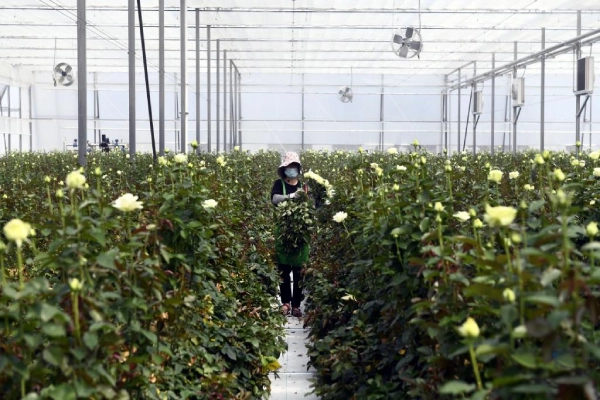
Commercial rose farming has transformed dramatically over the past decade. Global floriculture demand continues to grow, buyers expect consistent premium quality, and climate fluctuations are forcing growers to shift from open-field cultivation to controlled greenhouse environments.
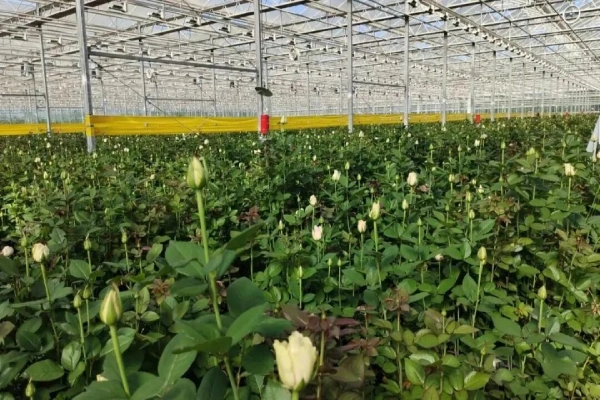
For rose growers seeking predictable yields, uniform stem quality, and year-round profitability, a well-engineered greenhouse has become the most efficient and scalable production model.
This guide provides a complete roadmap for commercial farmers—including climate parameters, structure selection, irrigation strategies, pest management, harvesting standards, and financial considerations. It is written specifically for growers planning to build or optimize a commercial greenhouse rose farm.
Section 1: Why Greenhouse Rose Farming Outperforms Open-Field Cultivation
Roses are extremely climate-sensitive. Small variations in humidity, temperature, or light intensity can cause malformed buds, weak stems, reduced color saturation, or pest outbreaks.
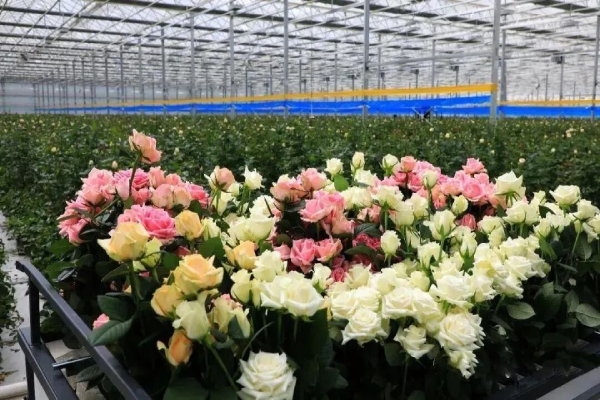
A greenhouse solves these challenges by providing:
1. Stable Microclimate for Premium Stem Quality
A controlled structure allows growers to maintain:
Temperature: 16–28°C (optimum for growth and bud formation)
Relative humidity: 60–70%
Light: 20–30 mol/day (DLI) for ideal flowering
CO₂: 800–1,200 ppm for faster photosynthesis
This results in: Longer stems, larger buds, better color intensity and higher uniformity grade.
2. Year-Round Production
Greenhouse roses can maintain 45–50 crop cycles annually, enabling continuous supply for the floral market, especially for:
Valentine's Day
Mother's Day
Qixi Festival (Valentine's Day of China)
Christmas and New Year
3. Higher Profitability
Greenhouse-grown roses typically achieve:
2–3 times yield of open-field farming
30–60% reduction in pest incidence
20–40% better post-harvest vase life
More consistent grading (AAA/AA)
Section 2: Choosing the Right Greenhouse for Rose Farming
Selecting the appropriate greenhouse structure dictates your long-term cost, productivity, and climate stability. Below are the most common options for commercial rose farms.
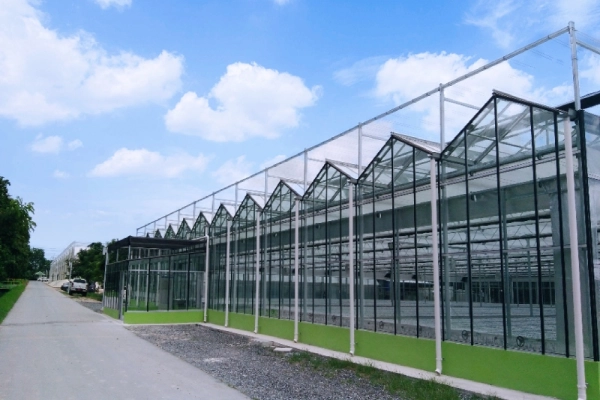
1. Venlo Glass Greenhouse (Premium Option)
Venlo Glass Greenhouse is best for: high-end farms targeting export-grade stems.
Advantages:
Maximum natural light transmission (85–92%)
Long lifespan (20–30 years)
Precise environmental control
Suitable for automation systems (screens, HVAC, CO₂)
Considerations:
Higher capital cost
Requires professional installation
2. Polycarbonate Greenhouse
Polycarbonate greenhouse is best for regions with cold winters; growers seeking durability but lower cost than glass.
Advantages:
Strong thermal insulation
UV protection
Lower cooling/heating expenses
10–15 years lifespan
3. Multi-Span Plastic Film Greenhouse (Cost-effective)
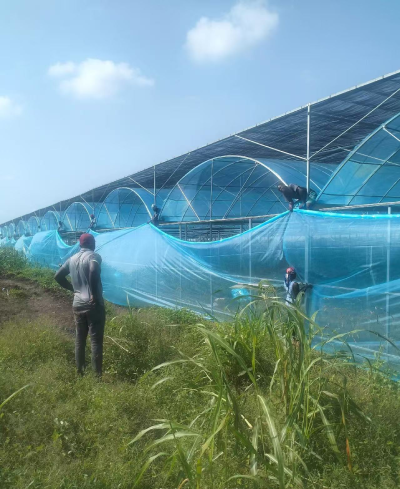
Multi-Span greenhouse is best for: medium-scale farms in mild climates.
Advantages:
Low upfront cost
Easy to build and expand
High ventilation capacity
Considerations:
Film must be replaced every 3–4 years
Slightly lower light diffusion compared to glass/polycarbonate
Section 3: Climate Requirements for Roses in a Greenhouse
Proper climate control is the backbone of commercial rose productivity.
Below are optimized environmental parameters:
Parameter | Optimal Range | Impact |
Day Temperature | 22–26°C | Faster growth, uniform bud formation |
Night Temperature | 16–18°C | Prevents weak stems; stabilizes growth |
Relative Humidity | 60–70% | Reduces fungal diseases; maintains turgidity |
Light Intensity (DLI) | 20–30 mol/day | Promotes flower initiation |
CO₂ Concentration | 800–1,200 ppm | Speeds up photosynthesis |
pH in Substrate | 5.5–6.5 | Ensures nutrient availability |
EC in Fertigation | 1.6–2.2 mS/cm | Healthy root uptake |
Section 4: Substrate, Irrigation, and Fertigation Strategy
Roses thrive with consistent moisture, high oxygenation, and balanced nutrients. A fully controlled fertigation system can significantly boost uniformity.
1. Preferred Growing Media
Coco peat (70%) + perlite (30%)
Rockwool slabs
Perlite + peat blends
2. Drip Irrigation + Fertigation
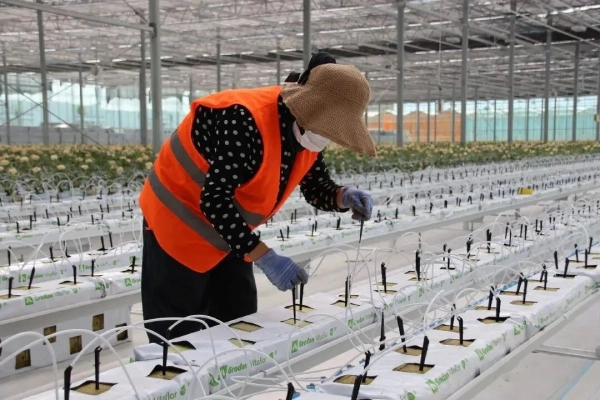
Use drip emitters (2–4 L/hr) with automatic nutrient dosing.
Key fertigation phases:
Vegetative phase (N-rich formula)
Bud formation (Higher K for color & stem strength)
Flowering phase (Balanced NPK + micronutrients)
3. Common Nutrient Ratios
Vegetative: 3-1-2
Budding: 2-1-3
Flowering: 1-1-2
Include essential micronutrients such as Mg, Fe, Mn, B, Zn.
Section 5: Integrated Pest and Disease Management (IPM)
Greenhouse roses are prone to humidity-related diseases. A structured IPM plan is essential.
Resource: IPM in the Greenhouse Series
1. Common Pests
Spider mites
Thrips
Aphids
Whiteflies
Control solutions:
Biological control: Phytoseiulus, Orius, Encarsia
Insect-proof nets
Sticky traps
Rotation-friendly pesticides (as needed)
2. Major Diseases
Powdery mildew
Botrytis
Downy mildew
Crown gall
Prevention:
Maintain humidity below 70%
Use horizontal airflow fans
Remove infected shoots immediately
Apply preventive fungicides in rotation
Section 6: Pruning, Training, and Canopy Management
Proper pruning increases stem length and bud quality.
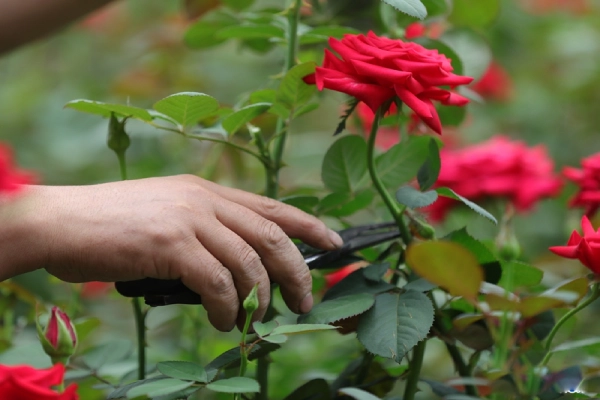
Key Techniques
Bending method: Directs energy to new shoots
Disbudding: Ensures single premium flower
Shoot alignment: Produces straight stems
Periodic thinning: Improves air movement and reduces disease
Plant Density
Recommended:
7–10 plants/m²
4–6 primary stems maintained per plant
Section 7: Cost and Profitability Analysis
Key cost components:
Greenhouse structure
Climate control systems
Substrate and fertigation
Labor
Varieties
Pest & disease control
ROI Timeline:
Most greenhouse rose farms achieve ROI in 2.5–4 years depending on climate and structure.
Typical yield:
150–200 stems/m²/year
High-tech farms can reach 220–250 stems/m²/year.
Section 8: FAQ about greenhouse rose farming
1. How profitable is greenhouse rose farming?
It is one of the most profitable floriculture crops, with stable year-round demand and high export value. ROI commonly occurs within 2.5–4 years depending on structure and climate control level.
2. What is the best greenhouse type for roses?
A Venlo glass greenhouse provides the best climate stability and premium stem quality. Polycarbonate and multi-span film greenhouses are cost-effective alternatives.
3. What climate is ideal for roses?
22–26°C daytime temperature, 16–18°C nighttime temperature, 60–70% RH, and 20–30 mol/day light intensity.
4. How many rose plants per square meter?
7–10 plants/m² is optimal for commercial production.
5. What is the expected yield in a greenhouse?
150–200 stems/m² per year is typical; high-tech farms may exceed 220–250 stems.
 English
 Malaysia
 Indonesia