
Choosing the right greenhouse covering material is the most critical decision you'll make for your greenhouse. This single choice impacts everything from your initial budget and operational costs to your crop's health and long-term return on investment (ROI). The decision is critical whether you're a home hobbyist looking to extend your growing season or a commercial grower managing a large-scale agricultural operation.
The primary debate has always been between traditional glass and modern polycarbonate. Glass offers timeless aesthetics and unparalleled clarity, while polycarbonate champions durability, insulation, and lower upfront costs.
This comprehensive guide from YIXINHEGRENHOUSE will compare these two materials across the key metrics that matter to both backyard gardeners and professional operations.
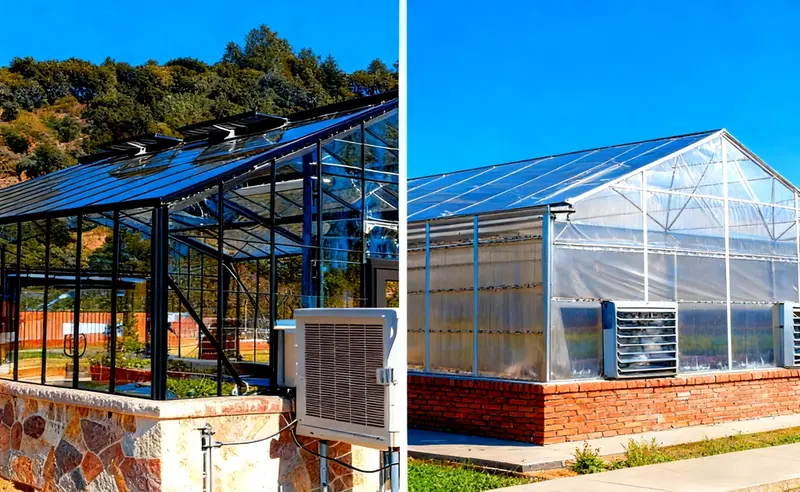
Quick Comparison: Polycarbonate greenhouse vs. Glass at a Glance
| Feature | Polycarbonate (Multi-Wall) | Glass (Tempered) |
| Insulation | Excellent | Poor (Single-Pane) / Good (Double-Pane) |
| Durability | Virtually Unbreakable | Fragile / Brittle (Can be tempered for strength) |
| Light Quality | Diffused (Prevents plant burn, better canopy penetration) | Direct (Can create "hot spots," requires shading) |
| Weight | Lightweight | Very Heavy |
| Installation | DIY-Friendly (Low labor cost) | Professional Help Recommended (High labor cost) |
| Upfront Cost | Lower | Higher |
| Lifespan | 10-20 Years (Consumable) | 40-50+ Years (Asset) |
| Safety | Excellent (Doesn't shatter) | Good (Tempered glass crumbles safely) |
1. Insulation & Operational Costs (The ROI Factor)
For both hobbyists and commercial growers, insulation is a direct control on operational costs. In cold climates, heating can account for over 30% of a commercial operation's total operating expenses.
Understanding R-Value
A material's insulating power is measured by its R-value. A higher R-value means less heat escapes, resulting in lower energy bills.
Single-Pane Glass: The baseline, with a poor R-value of approximately 0.95.
Heating a single-pane glass greenhouse in a cold climate can be "astronomical" , with costs potentially double or triple that of an insulated structure. 8mm Twin-Wall Polycarbonate: This is a common standard, offering an R-value of 1.6 to 1.7
, nearly double that of single glass. Double-Pane Glass: This is the direct competitor to multi-wall polycarbonate for serious growers. It has a good R-value of around 2.0
, making it highly energy efficient. High-End Polycarbonate: Thicker panels, like 16mm 5-wall, achieve R-values of 3.0 or higher
, offering some of the best insulation on the market.
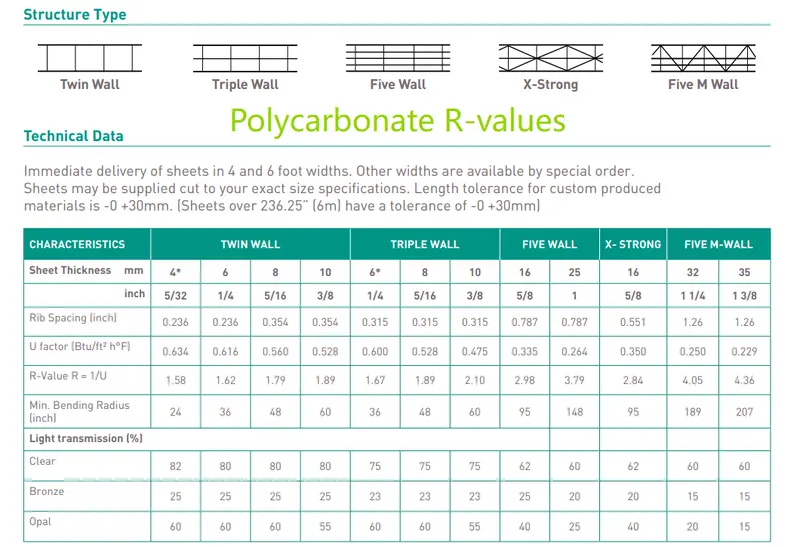
Tolerances: Thickness ± 5% , Length ± 1/4”, Width ± 1/8”, Weight ± 5%
The Takeaway: For a hobbyist, polycarbonate's insulation means a longer growing season and lower heating bills. For a commercial grower, multi-wall polycarbonate can lead to significant energy savings (up to 25% of operational costs)
2. Light Quality & Crop Yield (The Plant Health Factor)
It's a common misconception that maximum light transmission is always best. For plants, the quality and usability of light are far more important than raw intensity. The light plants use for photosynthesis is known as Photosynthetically Active Radiation (PAR).
Glass: Direct, Intense Light
Glass provides high-clarity, direct light, with transmission rates around 90% or higher.
Hot Spots: Intense, concentrated light beams that can scorch and burn leaves.
Shadows: The upper plant canopy gets 100% of the light, casting hard shadows on the lower leaves.
This means a glass greenhouse often requires an additional shade cloth system, adding another layer of cost and management for both hobbyists and commercial operations.
Polycarbonate: Diffused, Usable Light
Multi-wall polycarbonate panels are naturally light-diffusing. They scatter the light, creating a soft, even glow. This has profound horticultural benefits:
No Hot Spots: Plant burn is eliminated.
Better Canopy Penetration: Diffuse light "wraps around" the plant, penetrating deep into the canopy to reach lower leaves.
Increased Photosynthesis: By activating more of the plant's total leaf area, diffuse light is used more efficiently and can lead to faster, more balanced growth and higher yields.
Polycarbonate also blocks nearly 100% of harmful UV rays, protecting both plants and people inside the greenhouse.
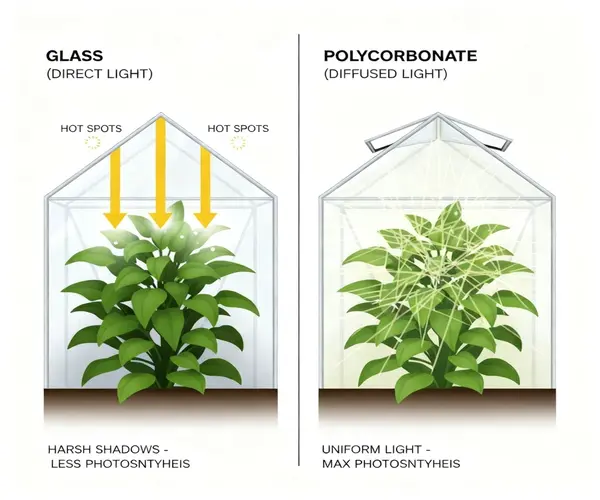
The Takeaway:For a hobbyist, light diffusion means healthier, more uniform plants with less scorching and fuss.
While choosing polycarbonate gives you a significant head start in thermal efficiency, even the best-insulated greenhouse can struggle in deep winter. Protecting your plants requires a complete strategy.
If you're looking for actionable solutions, explore our guide on 18 practical ways to keep your greenhouse warm in winter.
3. Durability, Safety, & Installation (The Practicality Factor)
This is where the materials differ most dramatically, impacting safety, risk, and installation costs.
Impact Resistance & Safety
Polycarbonate is "virtually unbreakable".
Glass is fragile. For any greenhouse, tempered (safety) glass is the only safe option. Annealed (standard) glass is not recommended as it breaks into dangerous, sharp shards. Tempered glass is 4-5 times stronger
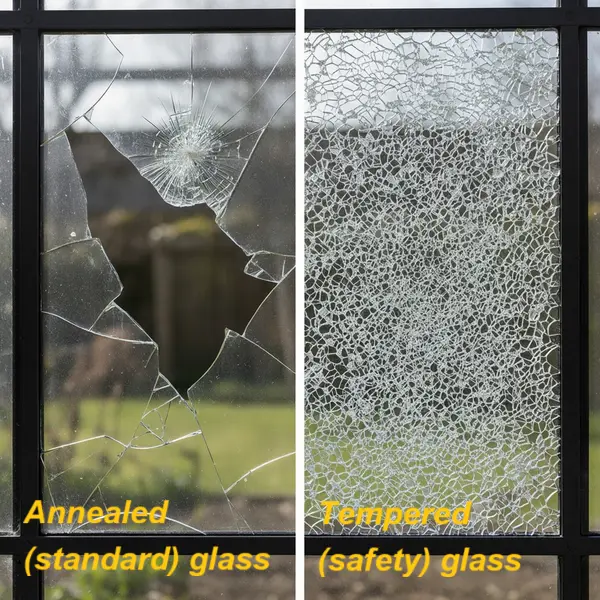
Weight & Installation
Glass is very heavy.
Structural Frame: It requires a heavier, more robust, and more expensive frame (e.g., heavy-gauge aluminum) to support the weight.
Labor: The heavy, delicate panels require professional installation, significantly increasing labor costs and project time.
Polycarbonate is extremely lightweight. This allows for a lighter, more affordable frame
The Takeaway: For a hobbyist, polycarbonate's durability and safety are ideal for a backyard with kids, pets, or mowers.
4. Total Cost of Ownership (TCO) & Lifespan
This is where the decision becomes a long-term financial calculation, and the "cheapest" option depends on your timeline.
4.1 Upfront Cost vs. Long-Term Lifespan
Upfront Cost (2C): Polycarbonate greenhouse kits are consistently more affordable than glass kits.
Upfront Cost (2B): Polycarbonate material is typically cheaper per square foot.
Glass is a premium initial investment. In large-scale projects, the glazing cost can range from $14/sq. ft. for a poly-covered structure to over $45/sq. ft. for a more complex polycarbonate build. Lifespan (Glass): A glass greenhouse is a 40-50+ year asset. It does not yellow or degrade from UV exposure. Barring impact, it lasts a lifetime.
Lifespan (Polycarbonate): This is a long-term consumable with an expected lifespan of 10 to 20 years.
4.2 Total Cost of Ownership (TCO)
Hobbyist (2C): A hobbyist may find polycarbonate's lower upfront cost and energy savings
more valuable, accepting the 15-year replacement cycle. Commercial (2B): A commercial grower must perform a TCO calculation. Glass has a very high initial cost but is a frugal long-term asset.
Polycarbonate has a lower initial cost and lower operational costs (heating) , but it is a recurring liability that must be replaced. In many TCO models, the significant annual energy savings from polycarbonate can offset this future replacement cost.
Glass wins on lifespan; Polycarbonate wins on upfront cost and operational (energy) cost.
5. In-depth on Polycarbonate 'Weaknesses' & Maintenance
While polycarbonate is superior in many ways, it is not without flaws. Understanding its specific maintenance needs is crucial for maximizing its lifespan.
5.1 Yellowing and UV Degradation
Polycarbonate's primary "weakness" is its vulnerability to UV radiation.
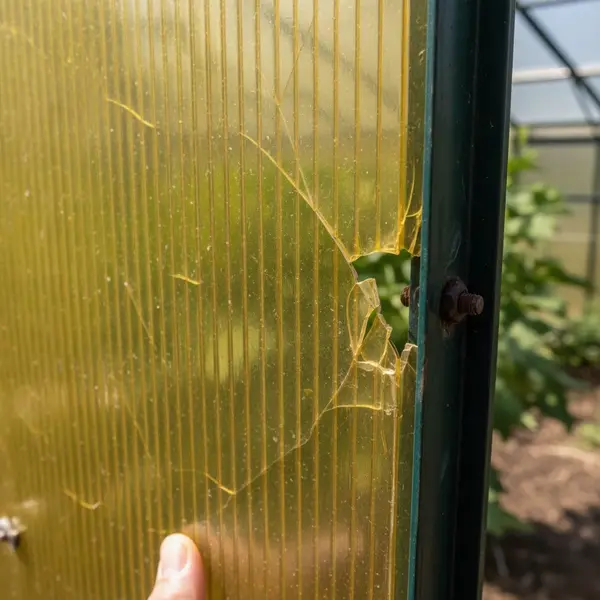
The Solution: High-quality polycarbonate panels are manufactured with a co-extruded UV-protective layer on one side.
This layer is critical and must be installed facing the sun (outward). Installing it upside down will cause the panel to degrade and yellow rapidly, often within 2-3 years. Important Note: This UV degradation is irreversible. It cannot be effectively polished out or restored once it occurs.
5.2 Scratching
Polycarbonate is not scratch-resistant.
The Solution: Maintenance must be gentle. Clean only with mild soap, lukewarm water, and a very soft cloth or sponge.
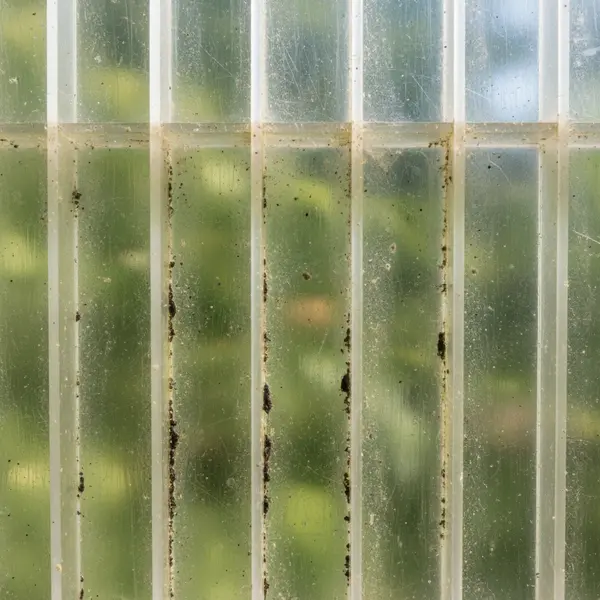
5.3 Flute Contamination
The internal channels (flutes) of multi-wall panels are a common point of failure. If not properly sealed during installation, they can accumulate moisture, dirt, and algae. This is unsightly and further reduces light transmission.
The Solution: Proper installation requires sealing the open ends of the panels with specialized vented and solid tapes to prevent this.
6. How Do They Compare to Other Plastics (Acrylic & Polyfilm)?
While glass and polycarbonate are the top contenders, two other common materials are worth noting.
Acrylic (Plexiglass): Acrylic is often seen as a middle ground. It offers superior optical clarity, similar to glass
, and is about 10 times stronger than glass, but still far less impact-resistant than polycarbonate. While it has good longevity , it is more prone to scratching than glass and can be combustible, which may be an issue for insurance. Polyethylene Film (Polyfilm): This is the budget/entry-level option, typically used for hoop houses. It is very low-cost and easy to install.
However, it has very poor insulation (R-value of ~0.83-0.87 for a single layer) and a very short lifespan, often needing replacement every 1-4 years.
7. The Verdict: Who Should Buy Which Greenhouse?
The best material depends entirely on your budget, climate, and goals.
Profile 1: The Home Gardener & Hobbyist
Winner: Polycarbonate
For the vast majority of backyard and hobbyist growers, polycarbonate is the clear and practical winner.
Affordability: Lower upfront kit and installation costs.
Safety: Ideal for backyards with children, pets, and mowers.
Durability: Resists damage from hail, wind, and accidents.
Insulation: Superior heat retention for extending the growing season in cold climates.
Ease of Use: DIY-friendly installation saves money
, and diffused light is more forgiving for plants.
Profile 2: The Commercial Grower & Large-Scale Operation
Winner: It Depends on Your Business Model.
The commercial decision is a financial calculation weighing capital expenditure (CapEx) against operational expenditure (OpEx).
Choose Glass (Tempered, Double-Pane) if:
Lifespan is Key: Your business model involves capitalizing the structure as a 40-50 year fixed asset.
Max Light is Required: You are in a low-light region or growing specific, high-light-demand crops (like some herbs or succulents) that benefit from direct PAR.
Aesthetics are Part of the Business: The glass greenhouse is part of a retail, research, or public-facing institution.
Choose Polycarbonate (Multi-Wall) if:
Minimizing OpEx is Key: You are in a cold climate where high heating costs
make polycarbonate's superior R-value the most important factor for profitability. Risk Mitigation is Priority: You are in a region with high winds or hail
, and the cost of replacing glass and losing a crop is too high. Minimizing CapEx is Key: You need to get operational with a lower upfront capital investment.
8. The "Best of Both Worlds": The Hybrid Solution
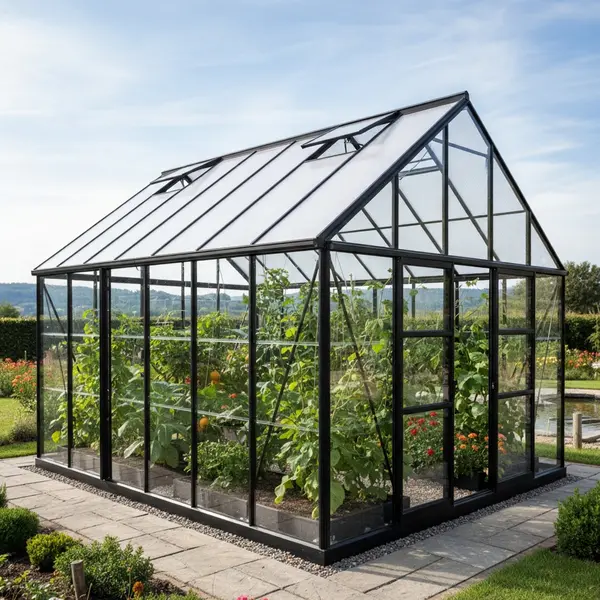
Many professional and high-end hobbyist growers are now choosing a hybrid design:
Glass on the vertical side walls for aesthetics and a clear view.
Multi-wall polycarbonate on the roof for superior insulation (where most heat is lost), hail protection, and diffuse overhead light to protect the plant canopy.
9. Frequently Asked Questions (FAQ)
Q: What is the best greenhouse material for cold climates? A: Polycarbonate is the best choice for cold climates.
Q: Is glass or polycarbonate better for hot, sunny climates? A: Polycarbonate is generally better.
10.Conclusion
There is no single "best" material. The choice between polycarbonate and glass is a long-term economic decision based on your specific crop, your local climate, and your primary goal—whether it's maximizing light (Glass) or maximizing insulation (Polycarbonate).
Choosing your covering is a critical step, but it's just one piece of the puzzle. This single decision directly impacts your choice of structure (a heavier Venlo for glass), your heating system requirements, and your total project cost.
To see how this crucial decision fits into the complete picture of greenhouse design, return to our Commercial Greenhouses 101 Buying Guide.
 English
 Malaysia
 Indonesia