
Choosing the right greenhouse covering—or "glazing"—is one of the most critical financial decisions a commercial grower will make
While global climates present unique challenges—from extreme heat in the Middle East to freezing winters in Scandinavia—the core decision rests on three primary commercial-grade materials: Polycarbonate, Glass, and PE Film
This technical guide analyzes the key performance metrics of these glazing solutions to help you optimize your facility for profitability
Key Performance Metrics for Commercial Coverings
A commercial greenhouse is an engineered asset. Its glazing is evaluated on four key business metrics:
Light Transmission & Quality: The percentage of PAR (Photosynthetically Active Radiation) light that reaches the crop. This is the primary driver of yield
. Thermal Performance (Insulation): The material's R-value or U-value, which determines how much you will spend on heating (OpEx)
. Lifespan & Durability: How many years the material will perform before it degrades (yellows, fogs) or fails (impact/wind)
. CapEx vs. ROI: The initial capital expenditure (CapEx) balanced against the material's lifespan and impact on yield and OpEx
.
Overview of Greenhouse Covering Options
Greenhouse coverings are defined by four key metrics: light transmission (critical for photosynthesis), insulation (to regulate temperature), durability (against weather and UV rays), and cost (initial investment vs. lifespan). Global users must prioritize these factors based on their local climate: tropical regions need heat resistance and ventilation, temperate zones require year-round temperature control, and cold areas demand strong insulation. The five most widely used coverings—polycarbonate panels, shade cloth, fabric, traditional glass, and plastic film—each excel in specific scenarios, but none are universally perfect.
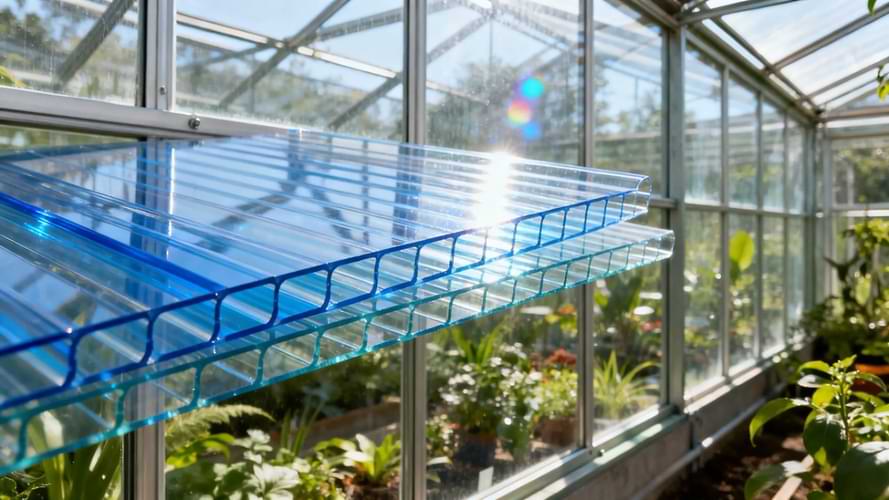
1. Polycarbonate Panels (The High-Insulation Option)
Polycarbonate is a rigid, multiwall plastic (e.g., twin-wall, triple-wall) used extensively in commercial operations
Pros
Superior Insulation (OpEx Savings): The air pockets in multiwall PC provide a high R-value, significantly cutting heating costs by 30-40% compared to single-pane glass. This is a critical advantage in cold regions like Canada or Northern Europe.
High Impact Resistance: Virtually unbreakable, making it the top choice for regions prone to hailstorms (like the U.S. Great Plains) or high winds
. Lightweight Design: At 50% the weight of glass, PC requires a less massive (and less expensive) steel support structure, reducing the overall project's CapEx
.
Cons
Light Degradation: Unlike glass, PC will degrade. Its lifespan is 10-20 years, during which it will slowly yellow and lose light transmission
. Condensation/Algae Risk: In high-humidity regions (e.g., Southeast Asia), the internal channels can trap moisture or algae if not properly sealed, which can reduce light quality
. Scratching: The surface is softer than glass and can be scratched during cleaning, which can diffuse light in unintended ways
.
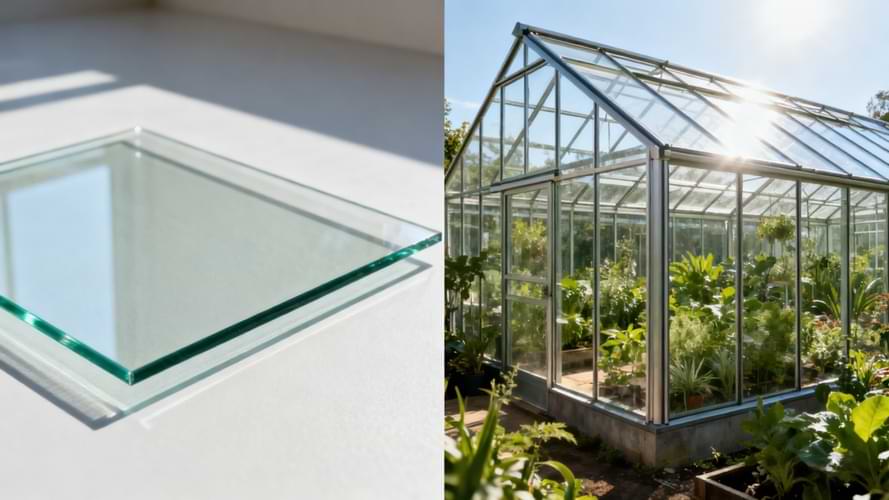
2. Glass (The High-Yield / Long-Life Option)
Glass remains the premium standard for high-tech commercial horticulture, valued for its unmatched clarity and lifespan
Pros
Maximum Light Transmission: Glass (especially low-iron or modern diffused glass) transmits 90-95% of PAR light, which is essential for high-value, light-hungry crops like tomatoes, peppers, and roses
. Non-Degrading Lifespan: This is its key advantage. Glass does not degrade. Its light transmission on day one is the same as in year 40, ensuring stable, predictable yields for decades
. Chemical & Scratch Resistance: Glass is chemically inert, resists scratching, and does not degrade from UV exposure, making it the most durable long-term investment
.
Cons
Highest CapEx: Glass has the highest initial material cost and requires a heavy-duty, engineered steel structure (like a Venlo frame) to support its weight, significantly increasing foundation and structural costs
. Poor Insulation: Standard single-pane glass has a very low R-value, leading to high heating costs in cold climates. This makes double-pane glass or internal thermal screens (see below) a necessity, which adds to the cost
. Breakage Risk: While tempered glass is strong, it can be shattered by severe hail or catastrophic impacts
.
Is Glass right for your project? See details on our Multi-span Glass Greenhouse structures.
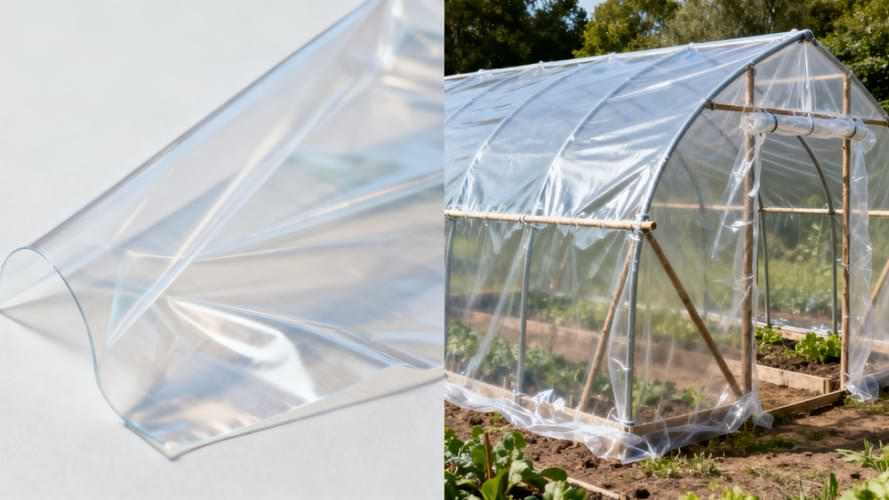
3. Polyethylene (PE) Film (The Low-CapEx Option)
PE film is the most widely used covering, particularly for large-scale tunnel-style greenhouses where minimizing initial investment is the primary goal
Pros
Lowest Initial CapEx: PE film allows growers to cover multiple hectares for the lowest possible upfront cost, offering the fastest path to seasonal production
. Good Initial Light: Modern, high-grade PE films (4-6 mil) offer excellent initial light transmission (85-90%)
. Advanced Technology: This is not simple plastic. Commercial-grade films are 5- or 7-layer co-extrusions with anti-drip, UV-blocking, and IR (infrared) reflective properties to help trap heat.
Cons
High OpEx (Maintenance): This is the trade-off. PE film has a very short lifespan (1-3 years for thin, 3-5 years for high-grade). This creates a recurring operational cost (labor and material) for replacement
. Low Durability & Insulation: It provides minimal insulation (unless used in a double-layer, air-inflated setup) and is highly vulnerable to tears from wind and hail, making it unreliable for high-value, year-round crops
. Condensation: PE film traps moisture, which can increase disease pressure in humid regions if not managed with proper ventilation
.
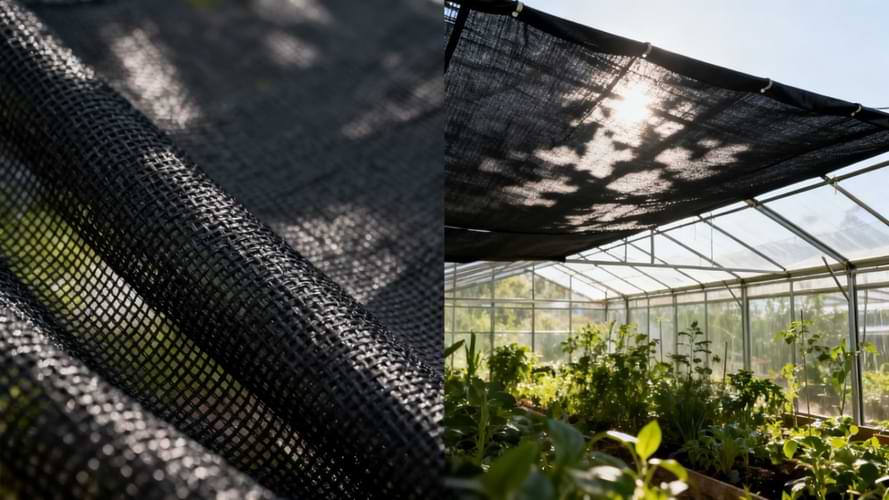
A Note on Supplemental Screens (Shade Cloth & Fabric)
It's critical to distinguish between glazing (the main structural envelope) and internal screens (climate management tools). Materials like shade cloth and non-woven fabrics are not primary B2B covering materials.
Shade Cloth: In a commercial operation, this is not just a cloth; it's an automated internal shade system. It's used under the glass or PC to control heat and DLI (Daily Light Integral) for sensitive crops
. It is a system, not a covering. Fabric (Row Cover): This is a lightweight, non-woven consumable used inside the greenhouse or in the field for temporary frost or pest protection. It is not a greenhouse construction material
.
Final Recommendations for Commercial Growers
Your covering choice is a strategic decision dictated by your climate, representing a trade-off between CapEx (initial cost) and OpEx (operational cost).
Tropical/Arid Regions (e.g., Brazil, India, Australia): Heat is the primary enemy
. While polycarbonate offers durability, the primary solution is a structural one (like a Sawtooth roof for ventilation), supplemented by internal shade systems . Glass is often avoided due to high heat gain . Temperate Zones (e.g., Western Europe, Japan, the U.S. Northeast): This is a balanced choice. Multiwall polycarbonate offers an excellent insulation-to-cost ratio
, while diffused glass is prioritized for high-value, high-light crops (like in the Netherlands) . Cold Regions (e.g., Canada, Russia, Scandinavia): This is a critical OpEx decision. Double-pane glass or thick (e.g., 16mm+) multiwall polycarbonate, combined with thermal screens, is essential for heat retention and profitability
. Budget-Constrained or Seasonal Projects: For lower CapEx projects, UV-treated, double-layer (inflated) PE film (used on tunnel greenhouses) often provides the best initial return on investment
.
Choosing your covering is a critical step, but it's just one piece of the puzzle. This single decision directly impacts your choice of structure (a heavier Venlo for glass), your heating system requirements, and your total project cost.
To see how this crucial decision fits into the complete project plan, return to our Commercial Greenhouses 101 Buying Guide.
Still debating Glass vs. Polycarbonate?Don't guess with your budget. Our engineers can simulate the ROI for your specific crop and climate to find the perfect match.
 English
 Malaysia
 Indonesia