
In the world of modern agriculture, types of commercial greenhouses represent the backbone of controlled-environment farming. These sophisticated structures enable growers to produce high-value crops year-round, independent of external weather conditions. From the iconic glass Venlo houses of the Netherlands to budget-friendly polyhouses in emerging markets, understanding the different types of commercial greenhouses is critical for anyone planning a profitable growing operation.
This guide explores the most widely used commercial greenhouse types, analyzing their structural designs, ideal applications, advantages, and limitations—all without overwhelming you with bullet points.
What Makes a Greenhouse “Commercial”?
A commercial greenhouse is not defined merely by size, but by its purpose-built design for efficiency, scalability, and return on investment. These facilities incorporate advanced climate control, automated irrigation, supplemental lighting, and data-driven crop management systems. Unlike hobby structures, commercial greenhouse types are engineered to minimize labor, maximize yield per square meter, and meet strict food safety and market standards.
The global commercial greenhouse industry now spans over 500,000 hectares, with the Netherlands, Canada, China, and Mexico leading in technology and production volume. Whether growing tomatoes in Ontario or orchids in Thailand, selecting the right type of commercial greenhouse can significantly impact success or failure.
1. Venlo Greenhouse: The Global Standard in Precision Farming
The Venlo greenhouse, named after the Dutch town where it was pioneered, remains the most advanced and widely adopted design in high-tech horticulture. Characterized by its aluminum frame and tempered glass panels, this structure features a steep roof pitch—typically 22 to 26 degrees—optimized for light transmission and snow shedding.
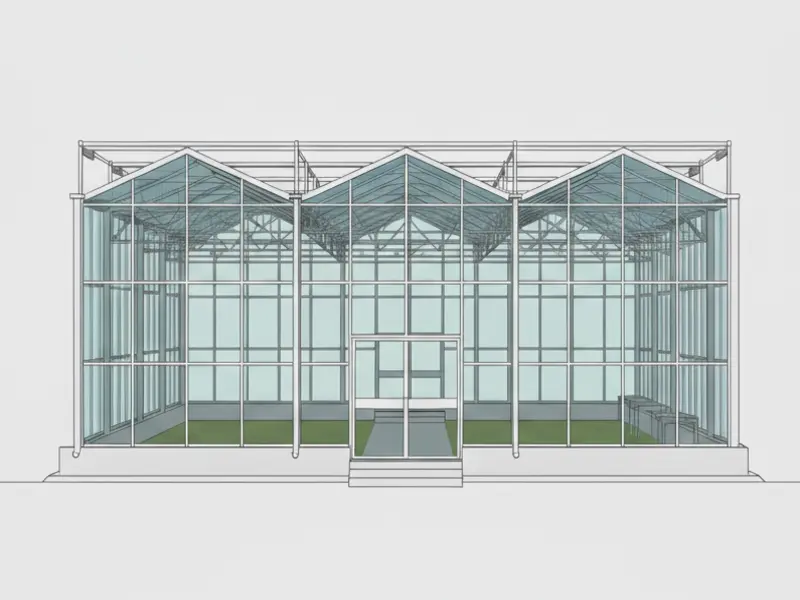
What sets the Venlo apart is its gutter-connected modular design. Multiple bays, often 9.6m, 12.8m, or 16m wide, are linked seamlessly, creating vast growing areas under a single climate-controlled environment. Roof vents running the full length of each ridge provide exceptional natural ventilation, while integration with computer-controlled systems allows precise regulation of temperature, humidity, CO₂, and light.
Growers favor Venlo greenhouses for high-value crops such as vine tomatoes, bell peppers, cucumbers, and cut flowers like roses and gerberas. In the Netherlands, over 90% of commercial greenhouses are Venlo-style, contributing to the country’s status as the world’s most efficient producer of fresh produce per square meter.
While initial costs are high due to glass and aluminum, the structure’s 20+ year lifespan, superior light diffusion, and compatibility with automation make it the top choice for long-term, high-yield operations.
2. Gutter-Connected Greenhouse: Built for Scale
For growers needing maximum land utilization, the gutter-connected design offers unmatched scalability. This system connects multiple even-span units side by side, sharing support posts and gutters, eliminating internal walkways and achieving up to 85% land use efficiency.
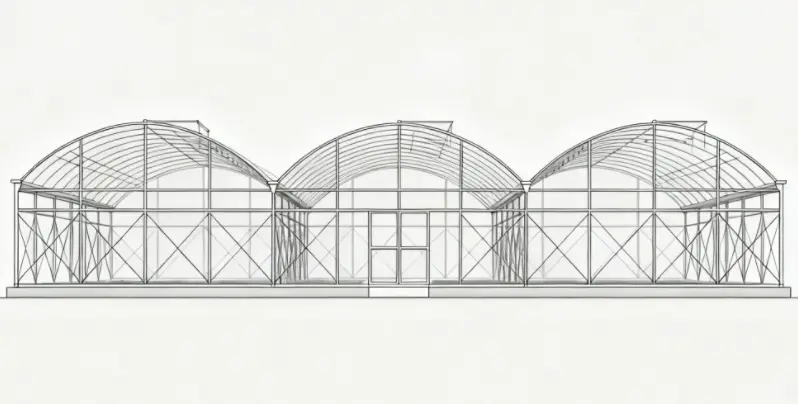
These greenhouses typically feature steel or aluminum frames covered with glass, twin-wall polycarbonate, or double-layer polyethylene film. The continuous roofline supports centralized heating, cooling, and irrigation systems, reducing operational complexity across large facilities.
In North America, particularly in Leamington, Ontario—often called the “Greenhouse Capital of North America”—ridge and furrow structures dominate tomato and pepper production, covering over 1,200 hectares. The design excels in hydroponic systems, where crops are grown in rockwool slabs or NFT channels, delivering consistent quality for supermarket chains.
Though more expensive to construct than standalone units, the ability to expand incrementally and operate under unified environmental controls makes this type of commercial greenhouse ideal for mid-to-large-scale vegetable growers.
3. Sawtooth Greenhouse: Natural Ventilation for Tropical Climates
In regions with high temperatures and humidity, the sawtooth greenhouse provides an energy-efficient alternative to fully sealed systems. Its defining feature is the asymmetrical roof: one side slopes gently, while the other rises vertically to house a continuous vent opening. This design promotes passive airflow, drawing cool air in from the sides and expelling hot air through the roof.
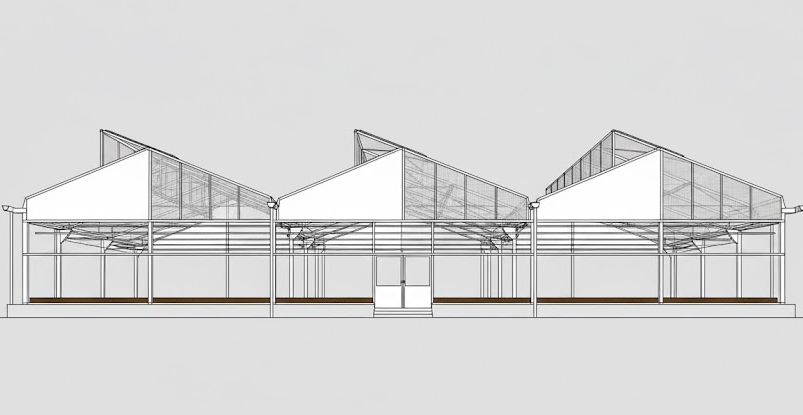
Sawtooth greenhouses are commonly built with steel frames and covered in polycarbonate or film, making them lighter and less expensive than glass structures. They perform best in tropical and subtropical zones, where mechanical cooling would otherwise drive up energy costs.
Growers of leafy greens, herbs, and orchids frequently choose this design. In Southeast Asia and Latin America, sawtooth facilities support thriving export industries for fresh basil, mint, and anthuriums. While light transmission is slightly lower than glass, the reduced need for fans and chillers often offsets this drawback in warm climates.
4. Open-Roof Greenhouse: The Best of Both Worlds
A newer innovation, the open-roof greenhouse, combines the protection of an enclosed structure with the benefits of open-field growing. Motorized roof panels—made of polycarbonate or ETFE film—retract fully during favorable weather, then close automatically when rain, wind, or cold approaches.
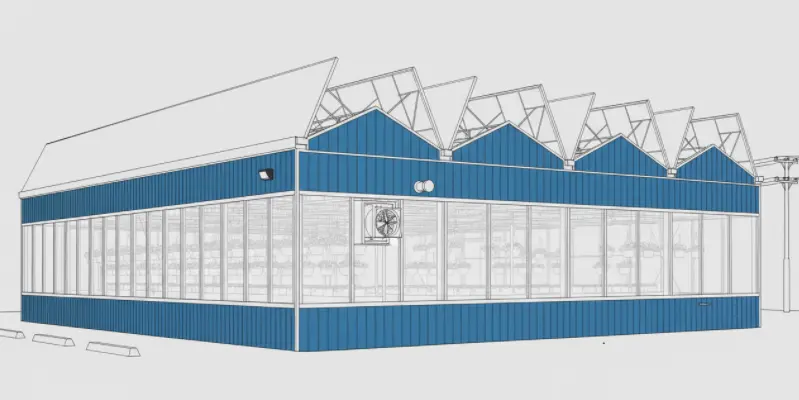
This hybrid approach eliminates the need for expensive cooling systems in temperate seasons, reduces disease pressure through superior airflow, and allows natural pollination for crops like strawberries and blueberries. Many organic certification bodies accept open-roof systems because they minimize pesticide use.
Though still emerging, this type of commercial greenhouse is gaining traction in the United States, Canada, and Australia, particularly among berry and specialty crop growers seeking sustainability without sacrificing control.
5. Polyhouse: Affordable Entry into Protected Cultivation
For operations in developing regions or those prioritizing low upfront costs, the polyhouse offers a practical starting point. These structures use galvanized steel hoops or trusses covered with UV-stabilized polyethylene film, typically 6 to 8 mil thick, in single or inflated double layers.
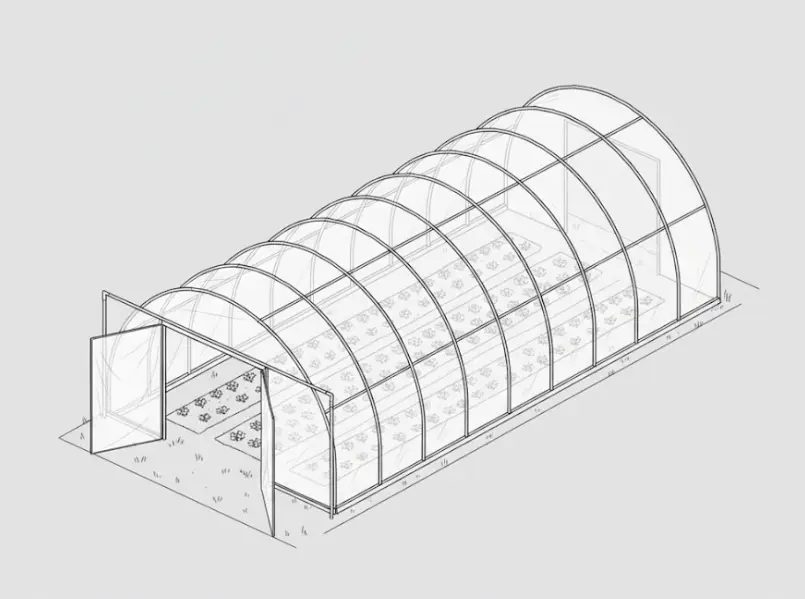
Polyhouses are quick to assemble, lightweight, and adaptable to various foundation types. They extend growing seasons by 2–4 months and protect against pests, hail, and heavy rain. Common crops include lettuce, spinach, microgreens, and nursery plants.
While the plastic covering lasts only 3 to 5 years and offers limited insulation, the low cost per square meter—often 1/5th that of glass—makes polyhouses viable for short-cycle, high-turnover crops. In India and China, polyhouses cover tens of thousands of hectares, supporting smallholder farmers entering commercial markets.
6. Shade House and Net House: Semi-Protected Growing
Though not fully enclosed, shade houses and net houses are integral to commercial tropical agriculture. Constructed with steel posts and covered in 30% to 90% shade cloth or insect netting, these open-sided structures provide filtered light, temperature moderation, and pest exclusion.
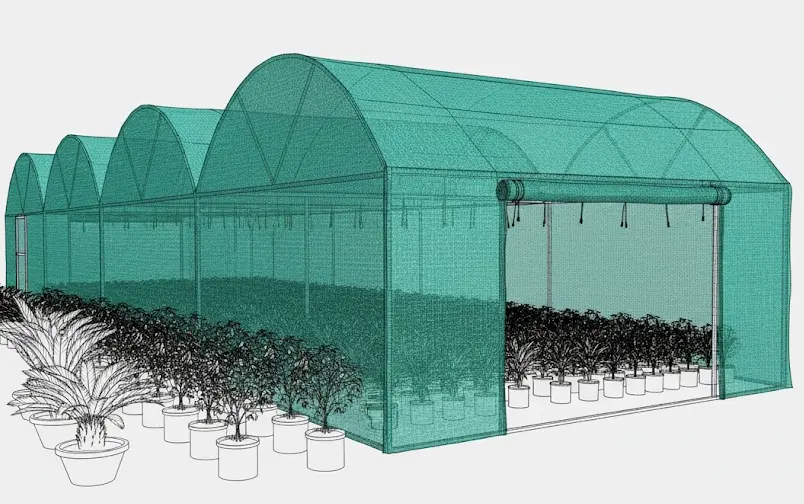
They are widely used for nursery propagation, ornamental foliage, and heat-sensitive crops like vanilla, coffee seedlings, and ferns. In Kenya and Colombia, shade houses support massive flower exports by protecting delicate stems from sun scorch and wind damage.
With minimal energy requirements and construction costs as low as $2–5 per m², shade houses serve as a low-risk entry into protected cultivation.
Covering Materials: A Critical Decision
The choice of covering profoundly impacts performance across all types of commercial greenhouses:
Tempered Glass: Offers 88–92% light transmission and unmatched durability but poor insulation and high weight.
Twin-Wall Polycarbonate: Diffuses light to prevent burn, insulates well, and resists impact—ideal for hail-prone areas.
Double-Layer PE Film: Provides 85–90% transmission with air insulation; cost-effective but requires frequent replacement.
ETFE Film: Ultra-light, 95% transparent, and self-cleaning—used in premium open-roof designs.
| Material | Light Transmission | Lifespan | Insulation | Relative Cost |
|---|---|---|---|---|
| Glass | 88–92% | 20+ years | Poor | High |
| Polycarbonate | 80–85% | 10–15 years | Good | Medium |
| PE Film | 85–90% | 3–5 years | Fair | Low |
| ETFE | 94–95% | 25+ years | Excellent | Very High |
Production Systems Shaping Greenhouse Design
Modern commercial greenhouse types are increasingly defined by their growing method:
Hydroponic systems using NFT channels or Dutch buckets dominate tomato and cucumber production. Substrate culture with coco coir or rockwool supports precision fertigation. Aquaponics integrates fish and plants in closed-loop systems, though still niche at scale. Aeroponics, misting roots in air, accelerates propagation in high-tech nurseries.
The integration of LED intercanopy lighting, CO₂ dosing to 1,200 ppm, and AI-driven climate computers has elevated Venlo and ridge-and-furrow designs into fully autonomous growing machines.
Choosing the Right Type: A Strategic Framework
Selecting among types of commercial greenhouses requires aligning structure with climate, crop, budget, and market goals.
In cold climates, prioritize Venlo or ridge-and-furrow with glass and heating. In tropical zones, opt for sawtooth or open-roof with film and natural ventilation. For rapid ROI, start with polyhouses; for premium branding, invest in high-tech glasshouses.
Energy costs, labor availability, and water access also matter. A 1-hectare high-tech tomato greenhouse may yield 500 tons annually with 90% less water than field farming—but only if the design matches local conditions.
The Future of Commercial Greenhouse Types
The next decade will see AI-optimized microclimates, robotic harvesting, solar-powered desalination, and multi-level vertical layers within traditional footprints. Companies like AppHarvest in the U.S. already operate 60-acre facilities producing 45 million pounds of tomatoes yearly using 90% less water.
Carbon-neutral greenhouses powered by geothermal and biogas are no longer futuristic—they’re operational in Iceland and the Netherlands.
Choosing the right structure—whether it's a Venlo, Gothic Arch, or Sawtooth—is the foundational first step.
Now that you have a clear understanding of the different greenhouse types, the next step is to see how this choice impacts your covering materials, systems, and overall project cost.
Return to our complete Commercial Greenhouses 101 Guide to continue your research.
 English
 Malaysia
 Indonesia