
💡 Key Takeaways (TL;DR)
Heating is Strategy: It's not just about temperature; it's about humidity control and yield timing.
Scale Matters: Hydronic (Boiler) systems are the standard for large-scale (>1ha) projects; Forced Air is best for smaller or seasonal setups.
Efficiency First: Don't size a heater until you've optimized your insulation (glazing and thermal screens).
The Hidden Multiplier: Root zone heating allows you to lower air temperatures, saving significant energy.
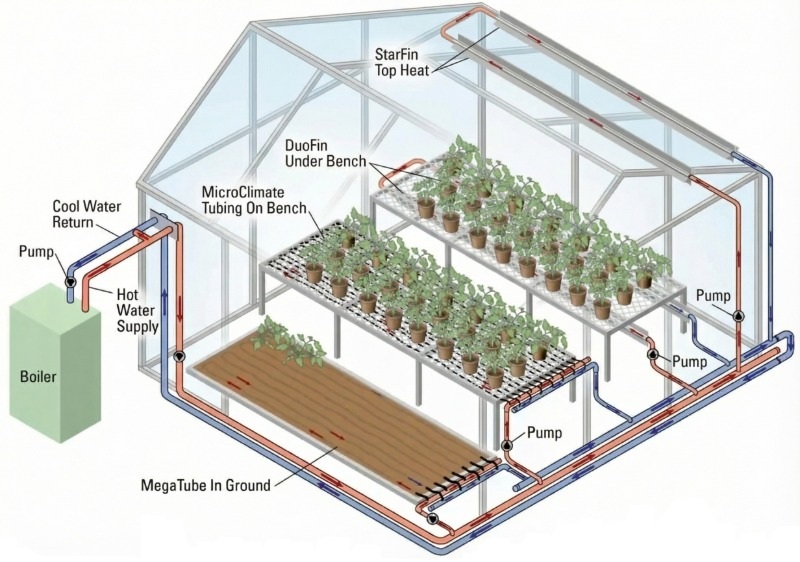
Heating systems are a critical component of an integrated commercial greenhouse climate control system, working together with cooling, shading, and lighting to maintain stable growing conditions.
In Controlled Environment Agriculture (CEA), temperature stability is the foundation of predictable yields and high crop quality.
For growers in temperate and cold climates, however, maintaining this stability is costly. Heating is frequently the single largest variable Operational Expense (OpEx) during winter.
A common planning mistake is to treat heating as an isolated task—just "keeping the plants warm."
The reality is: In a high-performance facility, heating is one integral pillar of a complete Climate Control Strategy, working in tandem with ventilation, humidity management, and irrigation.
Choosing the wrong system—or undersizing it—can lead to catastrophic crop loss during a freeze event. Even worse, an inefficient system will bleed your profit margins dry through wasted energy year after year.
Before sizing your heating system, it is critical to ensure your greenhouse structure is optimized for insulation to minimize heat loss. If you haven't selected your structure yet, read our Commercial Greenhouses 101 Guide first.
The Physics of Heating: Why "Delta T" Matters
To design an efficient system, we must first understand what we are fighting against. The capacity of your heating system is determined by the Delta T (ΔT).
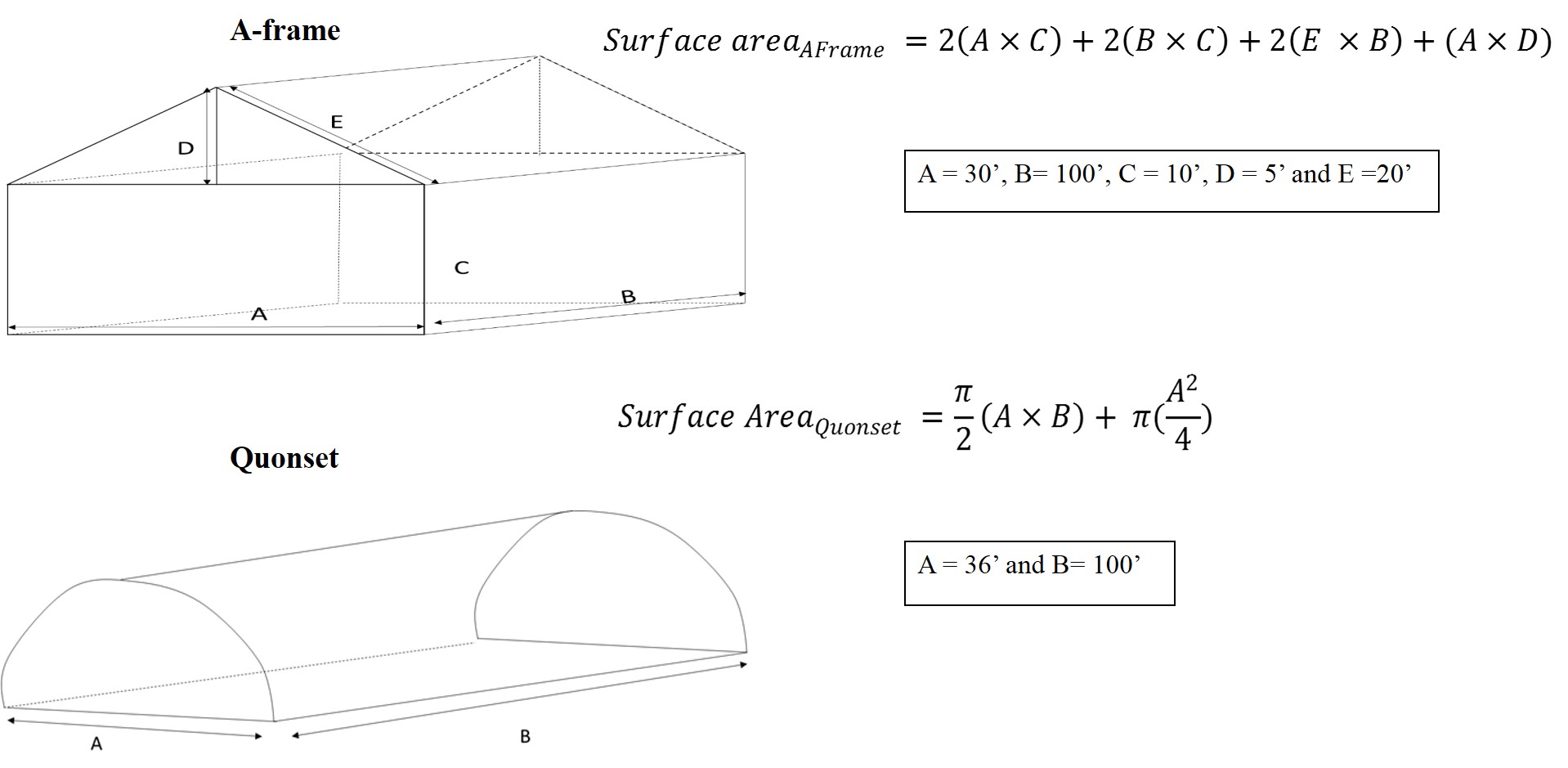
Delta T is the difference between your desired inside setpoint temperature (e.g., 18°C for tomatoes) and the absolute minimum outside temperature historically recorded in your location (e.g., -20°C).
The Formula:
18°C (Inside) - (-20°C Outside) = 38°C (Delta T)
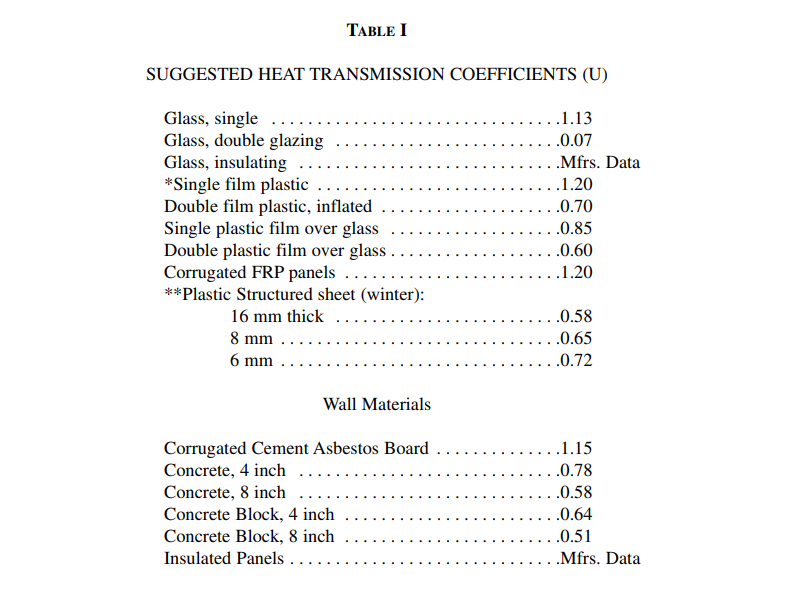
Simply put, Your heating system's sole purpose is to replace the energy lost through the greenhouse glazing at that specific Delta T. This heat loss is measured by the U-value (seeNGMA Standards) of your covering material.
High U-value (e.g., single glass): Rapid heat loss = High heating demand.
Low U-value (e.g., double-poly or thermal screens): Slow heat loss = Lower heating demand.
The ultimate goal? Maintain your target temperature with the least energy input, achieving the optimal balance between upfront investment (CapEx) and ongoing fuel costs (OpEx).
System Type 1: Hydronic (Hot Water) Heating – The Precision Choice
For large-scale commercial projects (>1 hectare) and high-value crops (tomatoes, cucumbers, cannabis), Hydronic Heating is the global gold standard.
How it Works
A central boiler (usually housed in a separate utility room) heats water to 60-90°C. This water is pumped through a vast network of steel pipes distributed throughout the greenhouse.
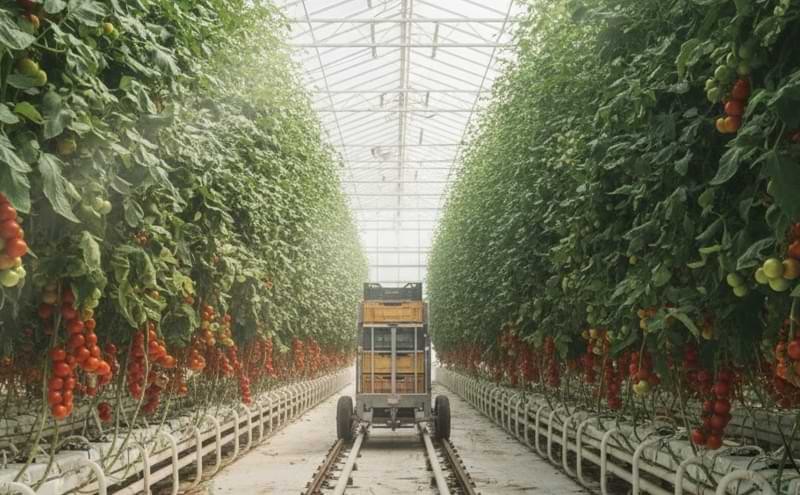
Pipe Rails: These pipes are typically laid on the floor brackets, serving a dual purpose as heating elements and transport rails for harvest carts and scissor lifts.
Grow Pipes: Additional pipes can be hung among the crop canopy (inter-lighting heating) or under gutters for snow melting.
Hydronic Systems Deliver Four Key Climate Advantages:
Radiant Heat: Unlike forced air that heats the air, radiant pipes warm plant tissue and the root zone directly. This results in more efficient heat transfer and a healthier plant environment.
Humidity Control: Radiant heat from the bottom prevents condensation on leaves, significantly reducing the risk of fungal diseases like Botrytis.
Thermal Mass: The large volume of water acts as a thermal buffer, preventing sharp temperature fluctuations and keeping the climate stable even if the boiler cycles off.
CO2 Enrichment: Modern gas boilers can be equipped with CO2 condensers. The exhaust gases are scrubbed and pumped into the greenhouse to boost photosynthesis—essentially providing "free" fertilizer.
Interested in Hydronic Systems? Explore our Boiler & Pipe Rail integration solutions.
System Type 2: Forced Air Unit Heaters – The Responsive Choice
For smaller commercial operations, seasonal nurseries, or tunnel greenhouses, Forced Air Heating is a common and practical entry point.
How it Works
Standalone unit heaters (fired by natural gas, propane, or oil) are suspended from the greenhouse structure. They contain a combustion chamber and a fan that blows heated air directly into the growing space.
Pros and Cons
Pros:
Low CapEx: Installing unit heaters is significantly cheaper and faster than plumbing a complex hydronic network.
Dehumidification: By burning fuel and heating air, these units are excellent at lowering relative humidity quickly—a key tool for "active dehumidification" strategies.
Response Time: Air heats up much faster than water. If you need to jump the temperature up by 5°C in 30 minutes, forced air is the answer.
Cons:
Micro-climates: Fans create airstreams, leading to hot spots near the heater and cold spots in the corners. This lack of uniformity can result in uneven crop growth.
VPD Fluctuations: The on/off blasts of hot, dry air can cause rapid swings in Vapor Pressure Deficit (VPD), stressing sensitive crops.
Need a flexible heating solution? View our Commercial Unit Heater options.
System Type 3: Root Zone Heating (Bench & Floor)
In modern climate control, we often say: "Steer the plant from the roots." Root zone heating is less about heating the room and more about activating the crop.
The Concept
Using flexible EPDM tubes or PEX piping, warm water (typically 30-40°C) is circulated directly under the growing benches or embedded in the concrete floor.
Climate Synergy
Energy Savings: By keeping the root zone at an optimal 20-22°C, you can often lower the overall air temperature by 2-3°C without slowing down plant growth. This significantly reduces fuel consumption.
Accelerated Growth: Warm roots absorb water and nutrients more efficiently, leading to faster propagation and vegetative growth.
Micro-climate Control: This system creates a warm micro-climate right around the plant base, keeping the foliage dry and healthy.
The Efficiency Multiplier: Thermal Screens
If you are installing a heating system without Thermal Screens (Energy Curtains), you are essentially heating the sky.
Role in Climate Control
A thermal screen is a retractable aluminum/fabric blanket installed horizontally above the crop. At night, it closes to trap the heat rising from your pipes or heaters.
Energy Savings: A single screen can reduce annual heating costs by 40% to 50%.
Shading & Cooling: In summer, the same system (depending on the cloth type) can be used to reflect sunlight, reducing the cooling load.
Integration
Advanced climate computers coordinate the boiler and the screen. For example, in the morning, the system will "gap" the screen (open it 5%) to let humidity escape before fully opening it, preventing cold air from dumping onto the plants.
Stop wasting energy. See our Automated Thermal Screen Systems.
Fuel Sources & Sustainability
The "engine" of your heating system depends on local economics and sustainability goals.
Natural Gas / Propane: The most common commercial fuel. It burns clean and allows for CO2 dosing.
Biomass: Wood chips or waste pellets. Ideal for regions with an abundant timber industry. While CapEx is high, fuel costs can be near-zero.
Waste Heat (Cogeneration/CHP): For very large facilities (5+ hectares), Combined Heat and Power (CHP) units generate electricity for the grid (or lighting) and use the waste heat for the greenhouse.
Feature | Hydronic (Boiler) | Forced Air (Heaters) |
Initial Cost (CapEx) | High | Low |
Efficiency (OpEx) | High (esp. with condenser) | Medium |
Temp Uniformity | Excellent (Even heat) | Poor (Hot/Cold spots) |
Humidity Control | Excellent (Radiant heat) | Good (Active drying) |
Response Time | Slow (Thermal mass) | Fast (Instant heat) |
Best Application | Large Scale / High Value | Small Scale / Seasonal |
Decision Matrix: Choosing for Your Climate
Which system is right for your project?
1.Cold & Cloudy (e.g., Canada, Northern Europe):
Recommendation: Hydronic (Boilers) + Thermal Screens + Grow Lights. You need the high output of boilers and the energy saving of screens.
2.Mild & Sunny (e.g., Mediterranean, California):
Recommendation: Forced Air might be sufficient for occasional frost protection. Or, use Root Zone Heating alone to extend the season.
3.High Humidity (e.g., Southeast Asia Highlands):
Recommendation: You need a system that supports active dehumidification. A combination of Hydronic Pipe Rails (to keep bottom heat) and Roof Vents is ideal to drive moisture out.
Conclusion
Precision heating is about balancing OpEx (fuel bills) with yield quality. It is not an isolated decision but a piece of the larger puzzle involving your structure, glazing, and automation.
Your Next Steps:
Check your Insulation: A great heater cannot fix a leaky structure. Review our Commercial Greenhouses 101 Guide to optimize your covering.
Plan for Cooling: Heating is only half the battle. Stay tuned for our upcoming guide on Commercial Greenhouse Cooling Systems.
Unsure about your heating capacity?
Consult our engineers for a custom Heat Load Calculation to ensure your crop stays safe and OpEx stays low.
 English
 Malaysia
 Indonesia