
Product Details
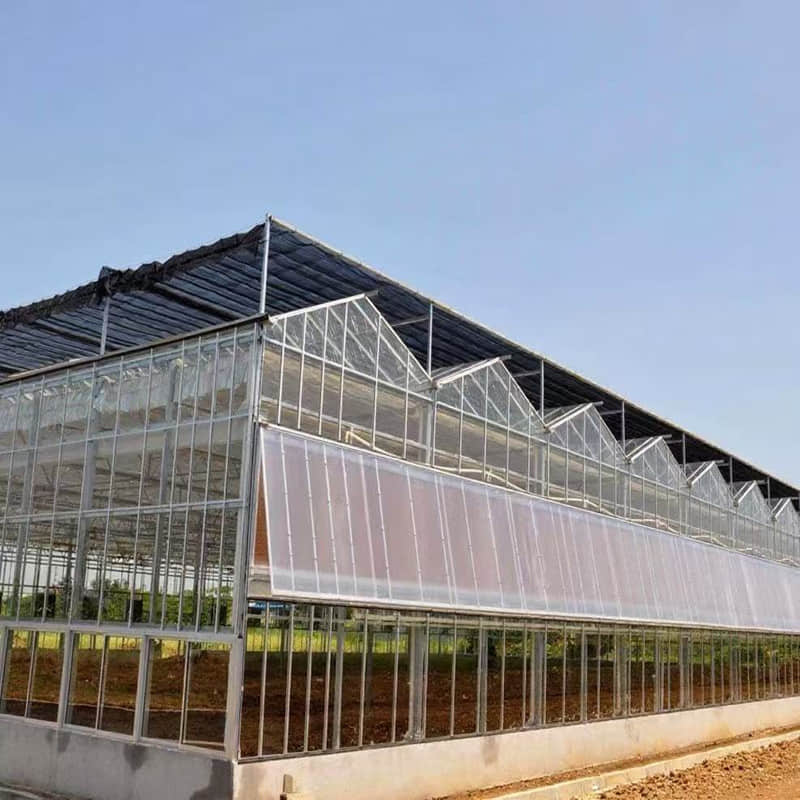
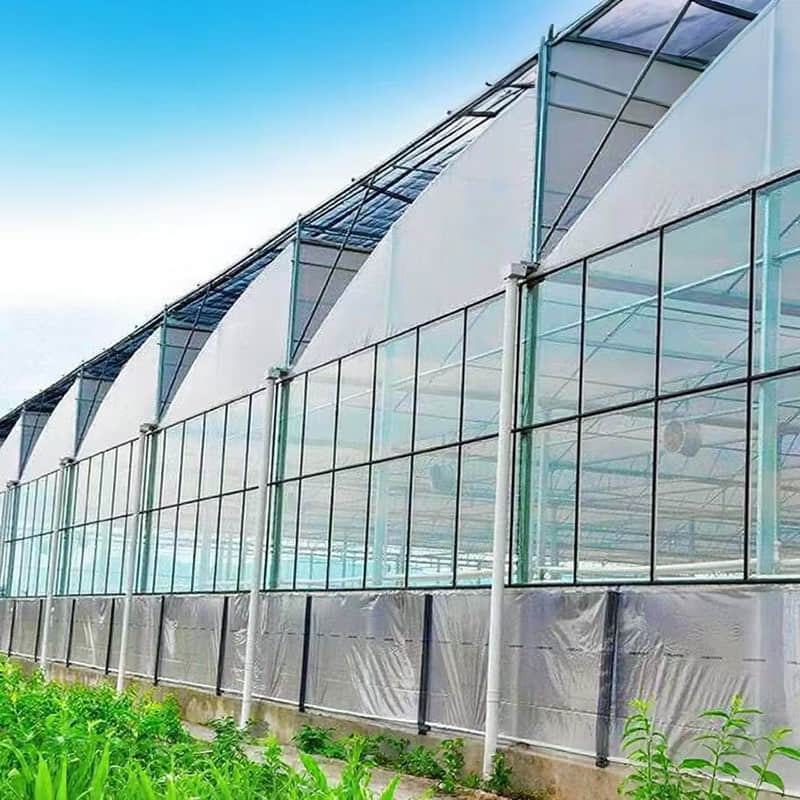
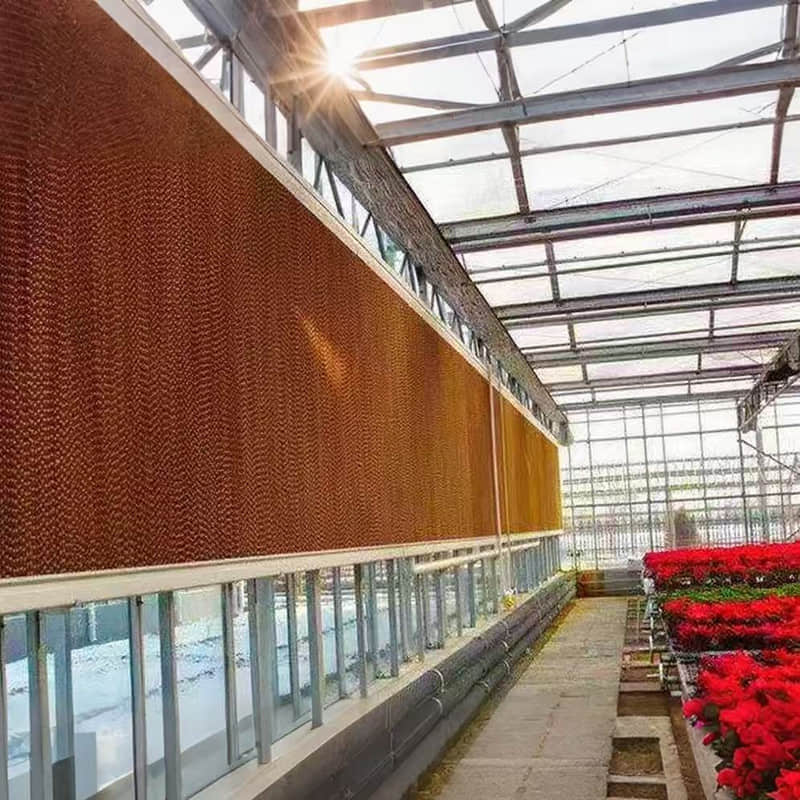
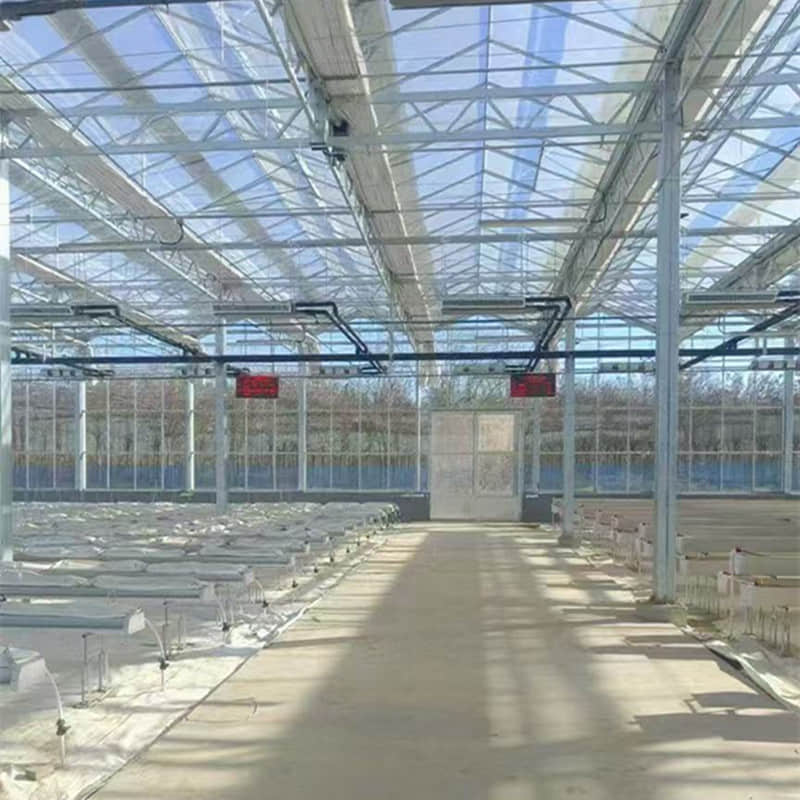
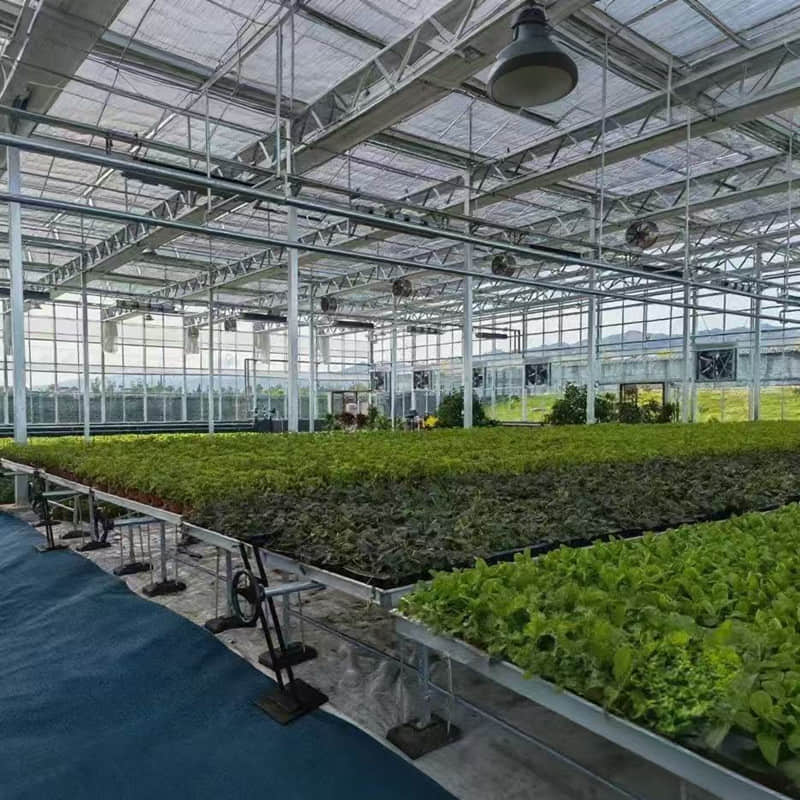
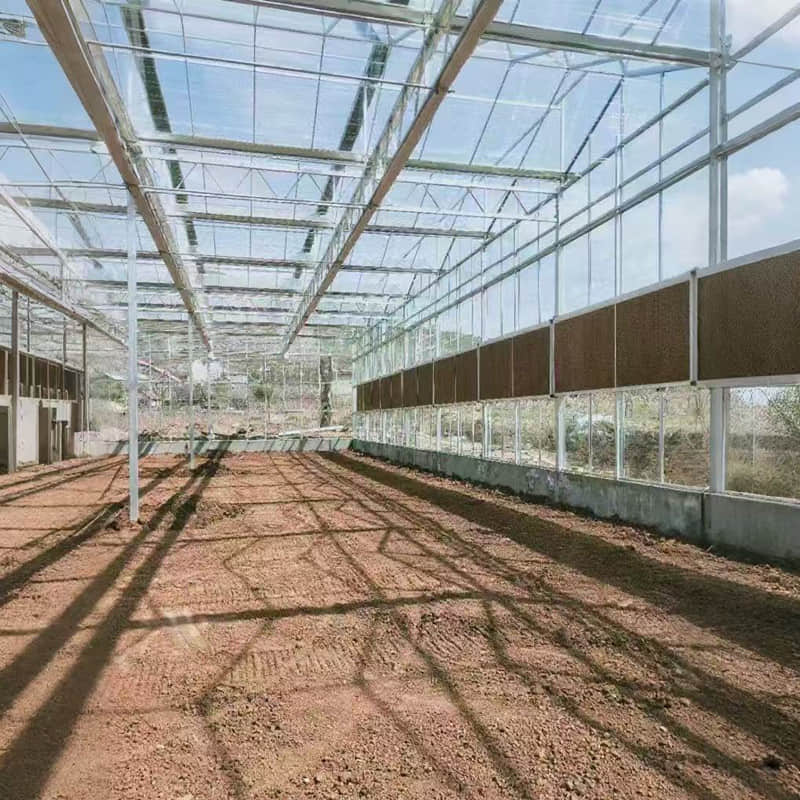
Glass greenhouse/sunlight board greenhouse /vein network greenhouse
- Typically constructed using hot-dip galvanized steel.
- The top and sides mainly use float glass with a light transmittance of over 85%.
- Ventilation System: Equipped with top-opening windows and side-opening windows.
- Optional heating equipment such as heaters, heat blowers, and ground.
A glass greenhouse is an agricultural facility building primarily covered with glass, which uses artificial control of temperature, humidity, light, CO₂ concentration, and other environmental factors to provide suitable growth conditions for crops. It is widely used in vegetable seedling cultivation, flower planting, fruit cultivation, and scientific research experiments. Its core advantages include high light transmission, good insulation performance, long service life, and the ability to achieve efficient year-round production, making it an important part of modern agriculture.
Structural Features
Frame Structure: Typically constructed using hot-dip galvanized steel (such as square tubes, round tubes) with strong wind and snow load resistance, corrosion resistance, and a service life of up to 15-20 years.
Covering Material: The top and sides mainly use float glass (commonly 4mm, 5mm thick), with a light transmittance of over 85%, uniform light distribution, and low tendency to condense, which does not affect crop photosynthesis.
Ventilation System: Equipped with top-opening windows and side-opening windows (manual or electric), combined with fan and water curtain cooling systems, to quickly adjust indoor air circulation and avoid high temperature and high humidity environments.
Temperature Control System: Optional heating equipment such as heaters, heat blowers, and ground
 English
 Malaysia
 Indonesia